What drives the cost of a campervan conversion?
Why two converters quote the same brief differently, what sits inside a base conversion, the four decisions that move the number, and what the first year of ownership adds on top.
Co-founder of HubDub Campers. Writes most of what you read here. Spends the rest of his time in the Petersfield workshop.
More about HubDubCampervan pricing in Britain is deliberately hard to compare, because converters quote different things and call them the same word. One quotes for the conversion alone. The next quotes several times that and means the conversion plus a brand-new van. Neither is lying. Neither is comparable, and almost nobody says which they are doing.
So here is ours, unpicked. This piece is about what moves the number rather than what the number is — our current prices live on the custom build page, where they stay correct. Everything below is the conversion only, because you supply the base van, unless it says otherwise.
What sits inside every conversion
Our starting price is not a stripped teaser with the useful parts removed and quoted back to you later. Before you specify anything at all, a HubDub conversion on a VW Transporter or Ford Transit Custom includes every one of the following.
- Full kitchen unit with a Smev 9222 sink and hob combination, fold-up micro-switch tap, electric water pump and a 10-litre water container.
- SmartBed EVO II rock and roll bed, crash-tested to M1, with two inertia-reel belts and a bed board matched to the furniture.
- 12V electrics: a 110Ah leisure battery on an automatic split-charge system, a 12V socket, a USB point and four LED touch-sensitive downlighters.
- 240V hook-up: double-pole consumer unit with RCD protection, a double 13A socket, a 15A automatic battery charger and an external input point.
- Dometic CRX-50 compressor fridge — 45 litres of cool storage plus 4.4 litres that can run as freezer, fridge, or both at once.
- Full insulation in fire-retardant, lightweight, non-irritant materials, all-new ply lining, Hi-Flex flame-retardant carpet on every panel and every piece of metalwork, and heavy-duty Altro flooring.
- Two bonded privacy-glass windows, one sliding and one fixed, plus a gas locker with a 50mm floor vent, regulator and bottle strap.
- Cupboards with push-button nickel catches, a tambour wardrobe with your choice of shelves or hanging rail, and a fold-up table on a sliding rail.
- DVLA M1 SP reclassification to motorhome, including the V5C paperwork and inspection. Most converters treat this as a chargeable extra.
What moves the quote
Most commissions land above the starting price, and the gap is made up of a surprisingly small number of decisions. Here they are in rough order of impact.
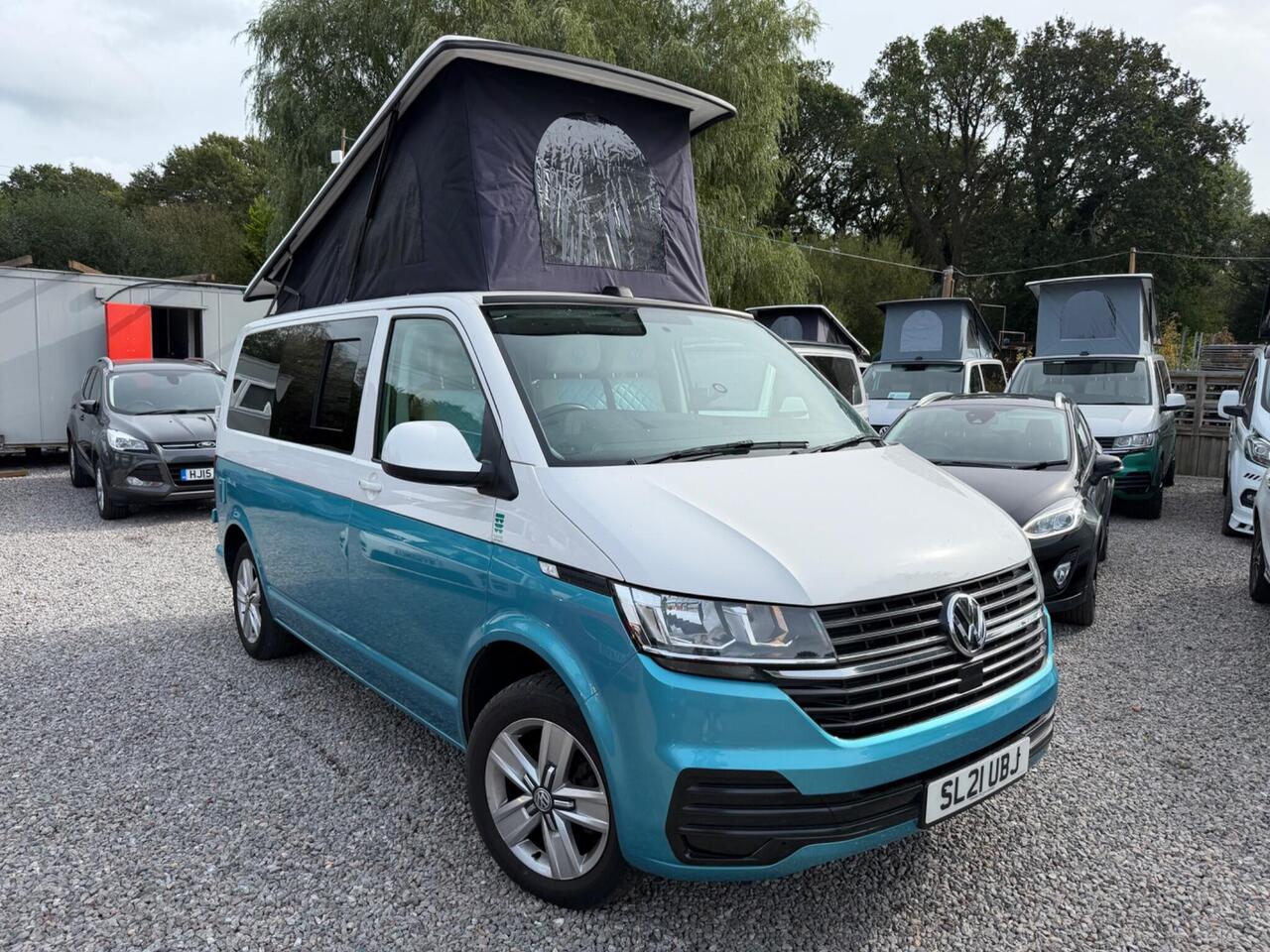
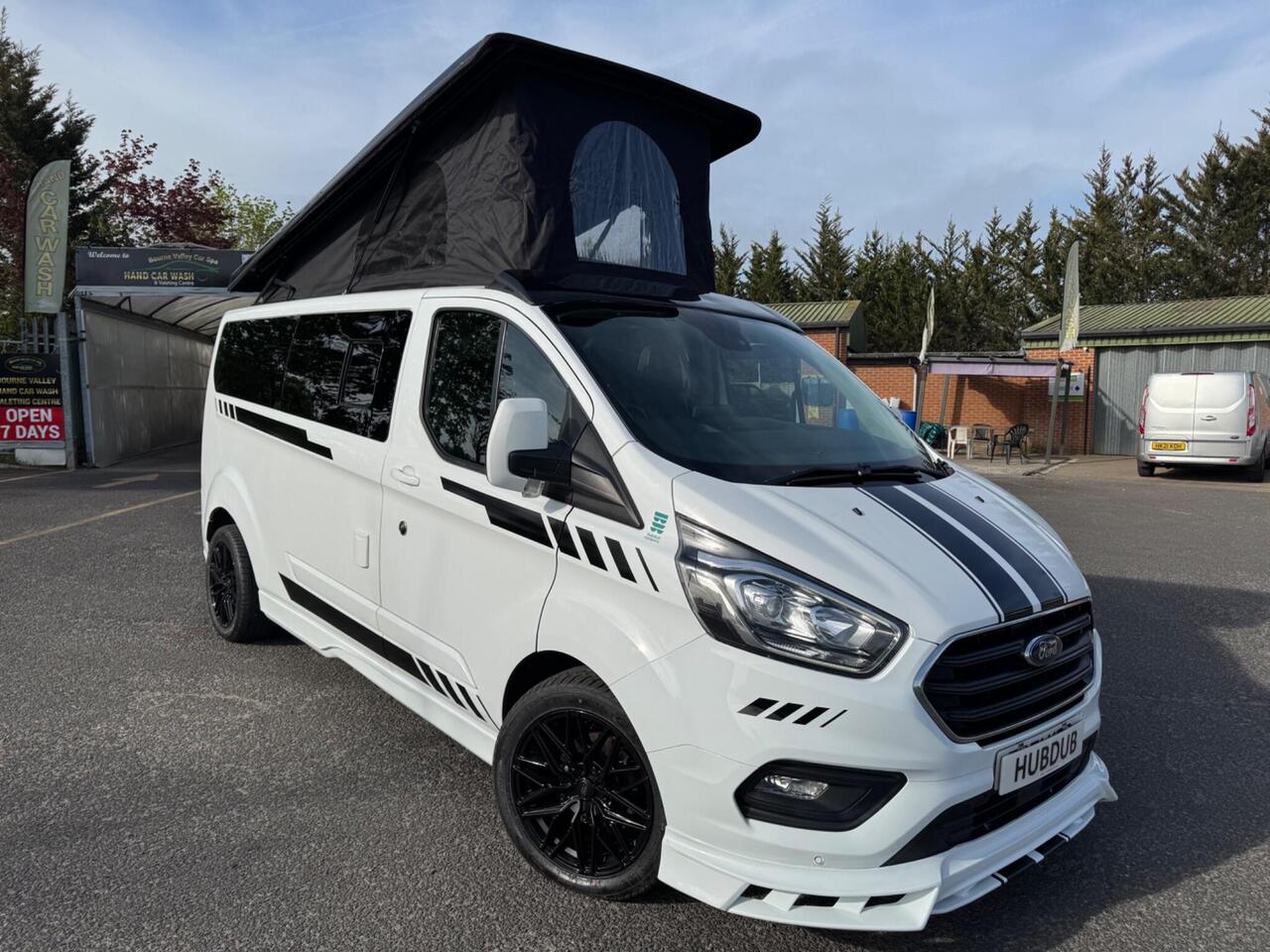
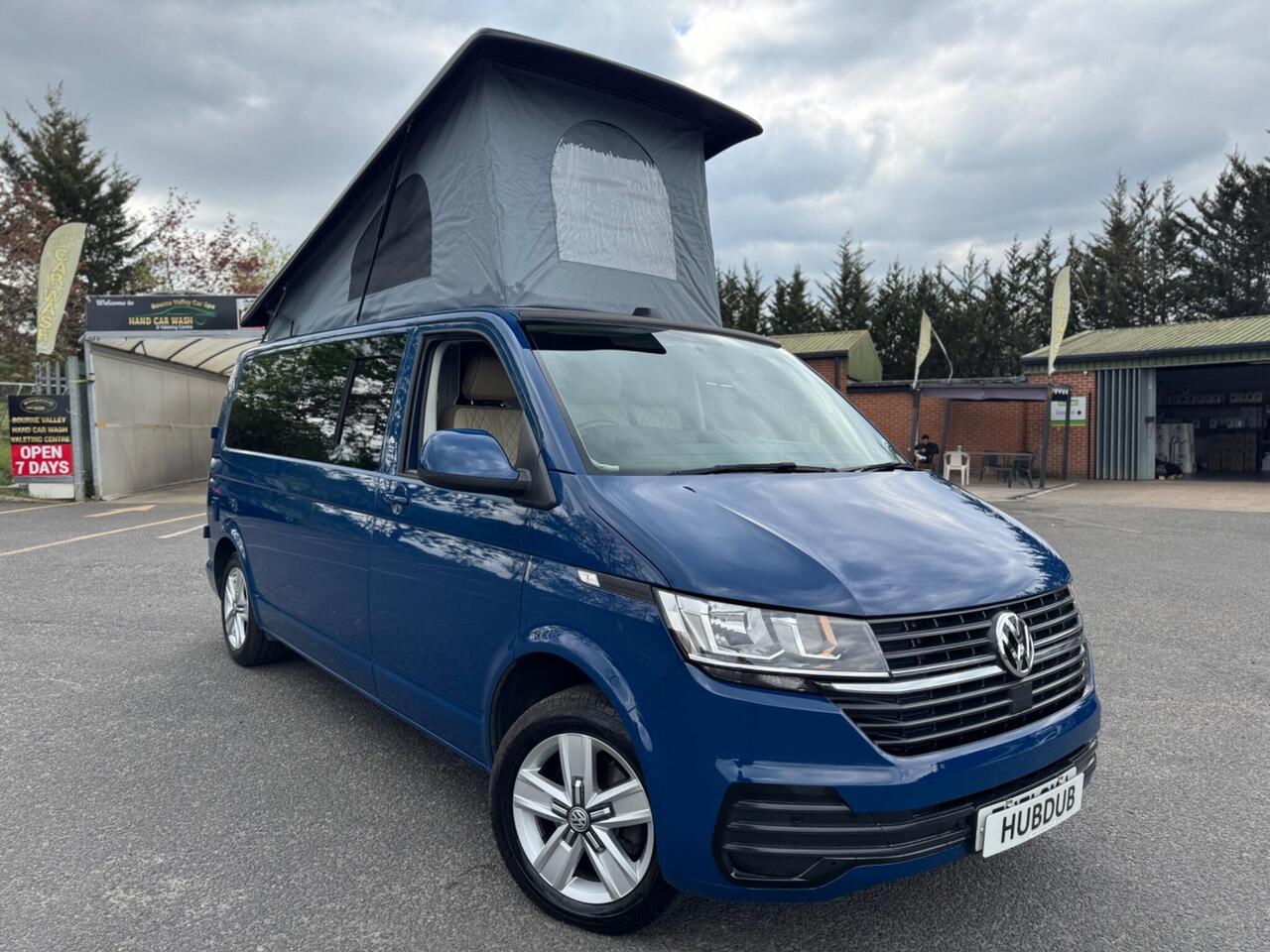
- The pop top. The single biggest line. A certificated, MOT-compliant vacuum-formed fibreglass roof in gloss black, with laser-cut stainless scissor hinges, galvanised side frames and an above-cab box-section strengthening frame, plus a gas-strut bed board that turns two berths into four. Quoted at spec because the roof and the van have to be matched.
- Wheelbase. Long adds a fixed amount over short, and considerably more room than that increment suggests. It is the best-value decision on this list.
- Night heating. Specified to how you actually travel and quoted at design sign-off. A buyer doing summer weekends in Dorset and a buyer doing February in the Cairngorms should not be sold the same heater.
- The swivel seat. A VW T6 double swivel base developed with Swivel King, M1 pull-tested, powder-coated, with a 500mm extension. It turns the cab into half your living space.
- Finishes. Carpet colour and wardrobe layout are choices, not upcharges — they sit inside the base price. Paint, upholstery and the more involved cabinetry work are where money goes if you want it to.
- EU travel pack. Green card, breakdown cover and toll tags, if you are heading for the continent.
You get a fixed price at design sign-off in week five, and it does not move afterwards. Not "subject to final specification". Fixed.
Adding the base van
If you do not already own a Transporter or a Transit Custom, you need one, and it is usually the largest single number in the whole exercise. You can sanity-check it against our own forecourt: put our conversion price next to what a finished camper sells for, and the difference is roughly what we paid for the van.
Buying the van yourself is usually the cheaper route and always the more transparent one. We will PDI anything you are considering before you commit — full inspection, OBD scan, structural check — and we will tell you if it is wrong. If you would rather we sourced it, we buy at cost plus a small handling fee, quoted up front.
Why two quotes for the same brief differ
Two converters can quote the same van very differently, and most of the gap is not margin. It is specification you cannot see once the panels are back on.
The bed is the clearest example. "M1 tested" means the bed was crash-tested as a seat. "M1 style" means it was built to resemble one and never tested. The phrase is everywhere, the price difference is significant, and the two look identical in photographs.
Charging is the second. A Euro 6 van has a smart alternator, and a split-charge relay will not charge a leisure battery properly from one. Doing it correctly means a DC-to-DC charger, which costs more and lives out of sight under a seat. The third is the gas locker: vented, sealed and draining outside the van, or a bottle sitting loose in a cupboard. That one is not a quality difference, it is a safety one.
Deposits, finance and part-exchange
A holding deposit reserves a build slot and is fully refundable until design sign-off in week five. After sign-off it becomes 30% of contract, and it stays refundable if we miss the sixteen-week handover by more than three weeks. In six years that has happened twice, both times waiting on parts.
Finance is arranged case by case rather than through one tied lender, so call the showroom on 07822 001233 and we will talk you through what is available for your situation. Terms are subject to status and affordability checks. We take part-exchange where the vehicle is a campervan or a daily driver of clear value, and there are no admin fees on anything we sell.
The first year of ownership
First-time buyers budget for the conversion and forget the year that follows it. Insurance is the item most affected by what we do: M1 SP reclassification typically takes a few hundred pounds a year off a campervan policy compared with running the same vehicle as a van, which is why it is included rather than optional.
Beyond that, budget for road tax at the private light goods or motorhome rate, an annual MOT once the van is old enough, and servicing at whatever the manufacturer's schedule prescribes for a Transporter or Transit Custom. None of it is exotic — that is rather the point of converting a mainstream van instead of something rare.
Common questions
Four decisions, in this order: the pop top, which is the largest single line and the one that changes the van most; the wheelbase; the night heating, which is specified around how you actually travel; and the finishes. Everything else sits inside the base conversion. Because we price the conversion and you supply the base van, our figures look very different from converters who sell you the vehicle too — current prices are published on our custom build page.
The full kitchen unit with a Smev 9222 sink and hob, a SmartBed EVO II M1 crash-tested rock and roll bed, 12V and 240V electrics with a 110Ah leisure battery and RCD-protected hook-up, a Dometic CRX-50 fridge, full insulation, ply lining, Hi-Flex carpet, Altro flooring, two bonded windows, a vented gas locker, a tambour wardrobe, and DVLA M1 SP reclassification.
No. The pop top is quoted at specification because the roof has to be matched to the van, and it is the largest single line in most quotes. It is also what turns a two-berth into a four-berth and adds standing height, so most buyers specify one.
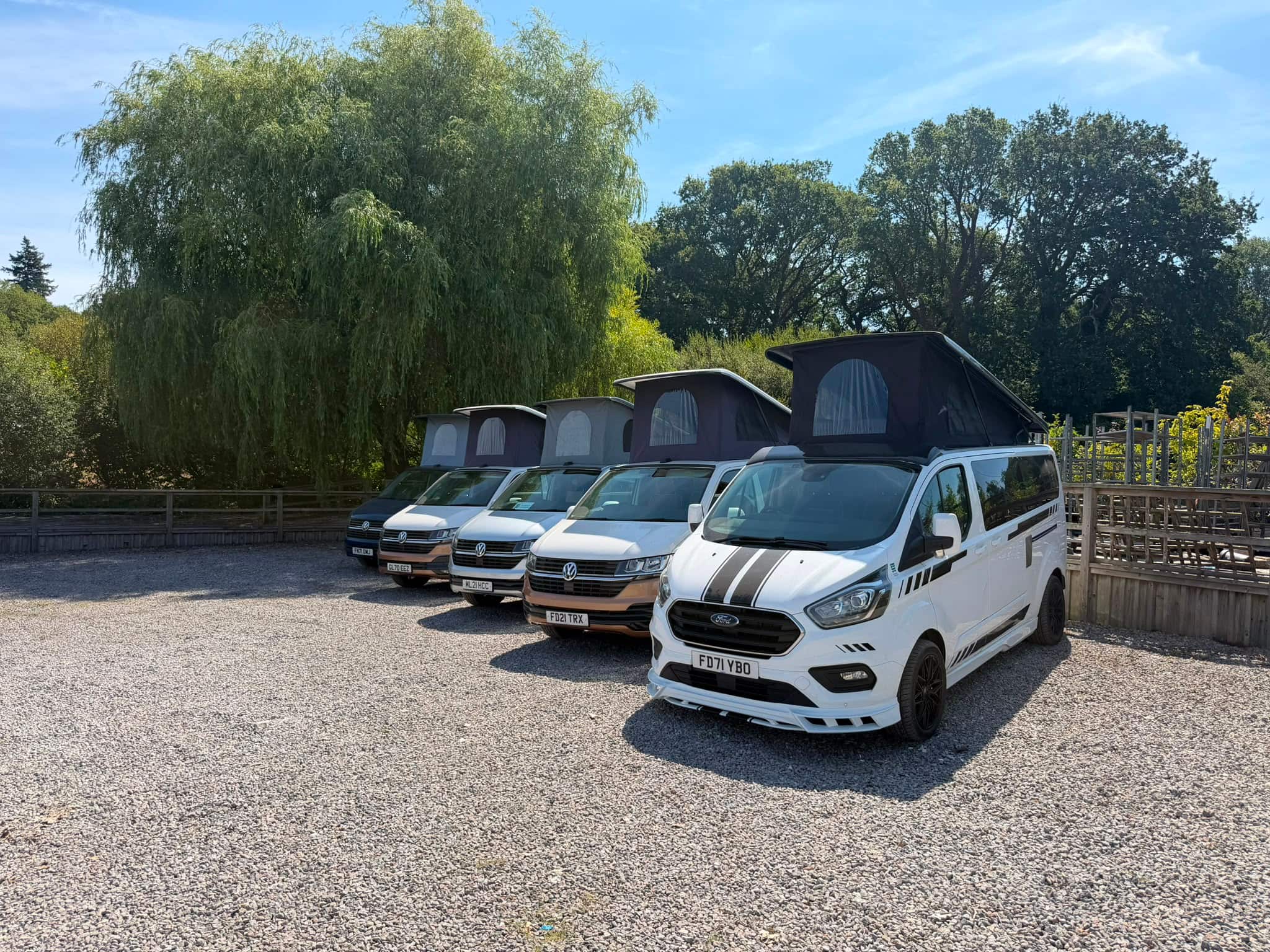
A finished camper is priced complete and on the road, with a 12-month conversion warranty, and every one is listed with its price on the campers page. A small refundable deposit holds one while you decide, there are no admin fees, and part-exchange is welcome.
Finance is arranged case by case rather than through a single tied lender. Call the showroom on 07822 001233 and we will talk through what is available for your circumstances. All terms are subject to status and affordability checks.
No. You get a fixed price at design sign-off in week five and it does not move afterwards. Everything that could change the number — wheelbase, roof, heating, finishes — is settled before a panel is cut.