The complete guide to commissioning a custom campervan in the UK
A conversion costs less than most first-time buyers expect and takes longer than most converters admit. What the process actually involves, what it really costs, and what to ask anyone before you sign.
Co-founder of HubDub Campers. Writes most of what you read here. Spends the rest of his time in the Petersfield workshop.
More about HubDubThere are four ways to end up owning a campervan in the UK. Buy a factory-built one off a forecourt. Buy somebody else's finished conversion. Convert a van yourself. Or commission a converter to build one on a van you own. This guide is about the last one, and about whether it is the right route for you.
We have converted VW Transporters and Ford Transit Customs from a workshop in Petersfield since 2019, and we finish twelve a year. Some of what follows is opinion, and where it is, we say so. The rest is the practical detail you need before you speak to anybody, us included.
What a commissioned conversion actually is
Commissioning does not mean every screw and switch is invented from scratch. A serious converter has a system: a tested kitchen unit, a crash-tested bed, a certificated pop top, a wiring loom that has been proven on dozens of vans. What you specify sits on top of that system — the wheelbase, the roof, the carpet colour, the wardrobe, the heating, and the hundred small decisions between week one and week sixteen.
The opposite is a production conversion, where the layout, the cabinetry, the electrics and the trim are fixed and you choose a colour. There is nothing wrong with that. It is faster and often cheaper. The argument for commissioning is that you keep the van for a decade, not a season, and the small decisions compound.
One thing to be clear about early, because it changes every number on this page: our price is for the conversion. You supply the base van. It is why our starting price looks so different from the figures quoted by converters who sell you the vehicle as well — they are not describing the same thing.
What it costs, honestly
Cost is the first question every buyer asks, and it is the one the industry answers worst — usually by quoting a number that silently includes a brand-new van. Here is the honest structure. There are three routes, and they cost very different amounts.
- Convert a van you already own. The cheapest route to exactly the van you specified, priced by wheelbase, with the roof and the heating quoted at specification. Nothing else to buy.
- Buy a base van, then convert it. Add the cost of a sound used VW Transporter or Ford Transit Custom to the figures above. This is the route most of our customers take, and it is the cheapest way to end up with exactly the van you specified.
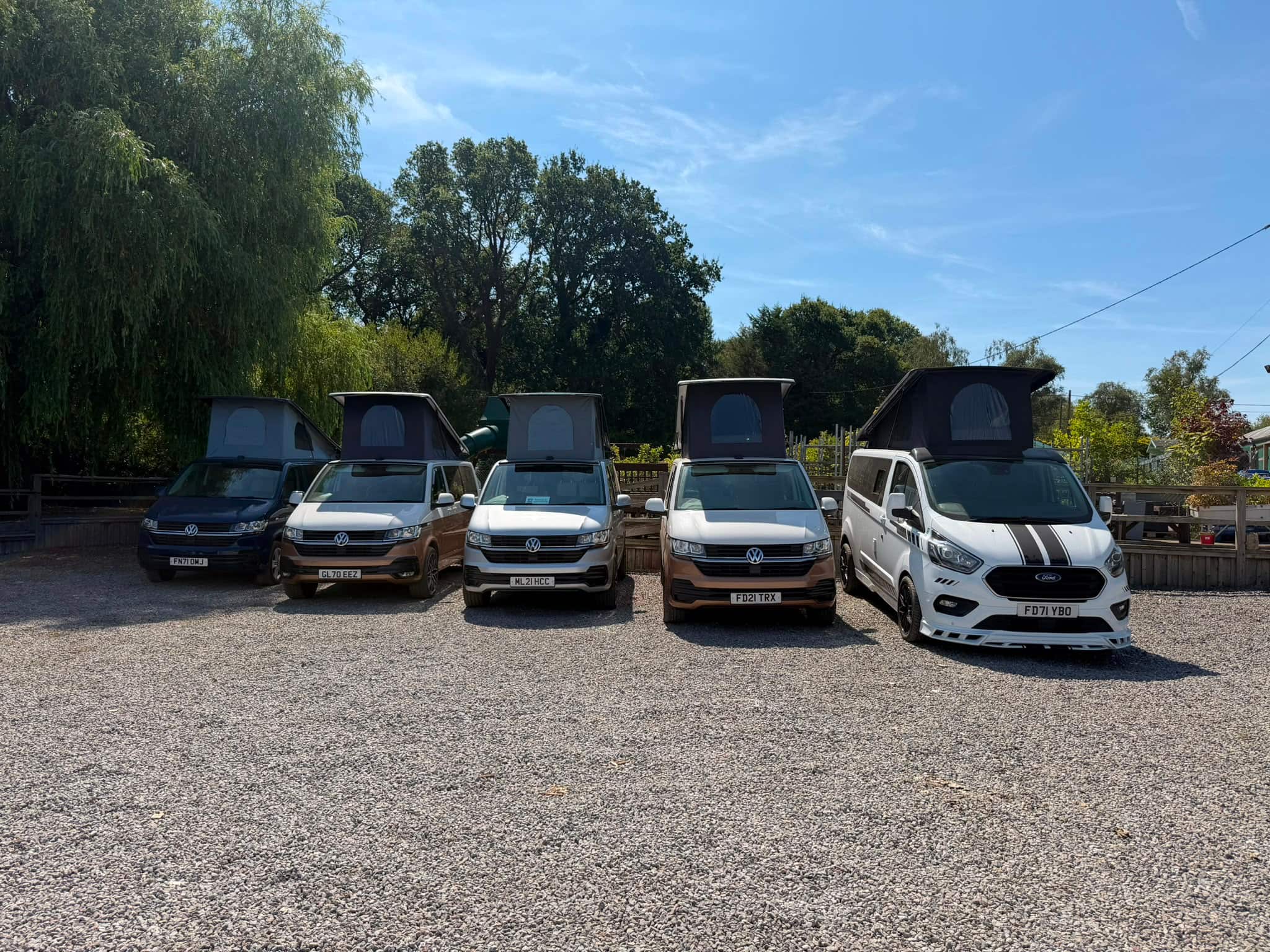
- Buy a finished camper off the forecourt. Complete and on the road, with a 12-month conversion warranty. You get it this month rather than in sixteen weeks, but you get somebody else's specification.
You can check that arithmetic against us rather than taking it on trust. Put our current conversion price next to what a finished camper sells for on our forecourt, and the difference is roughly what a good used base van costs. We are not hiding a margin in the middle, and both numbers are published.
Choosing the base van
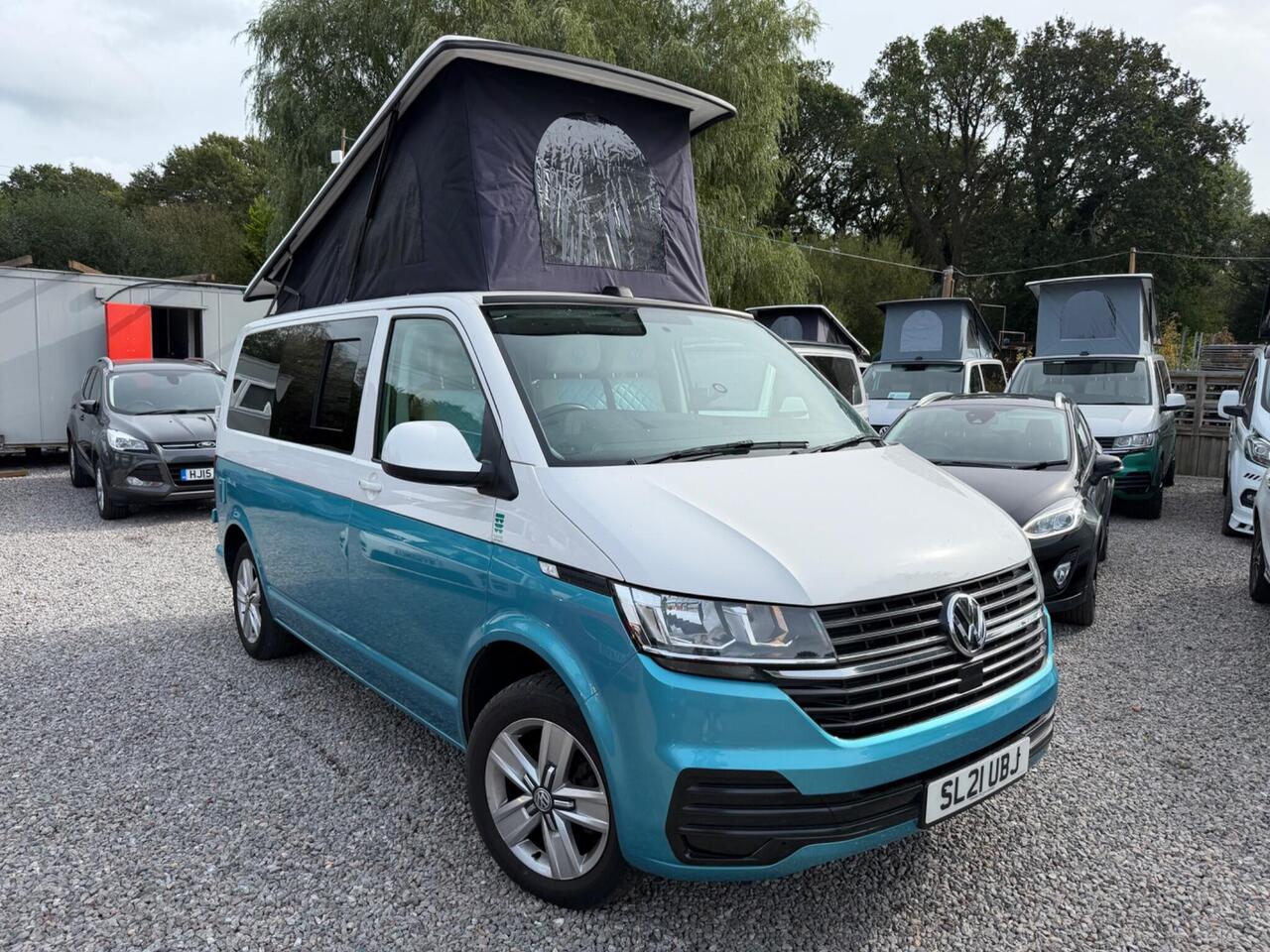
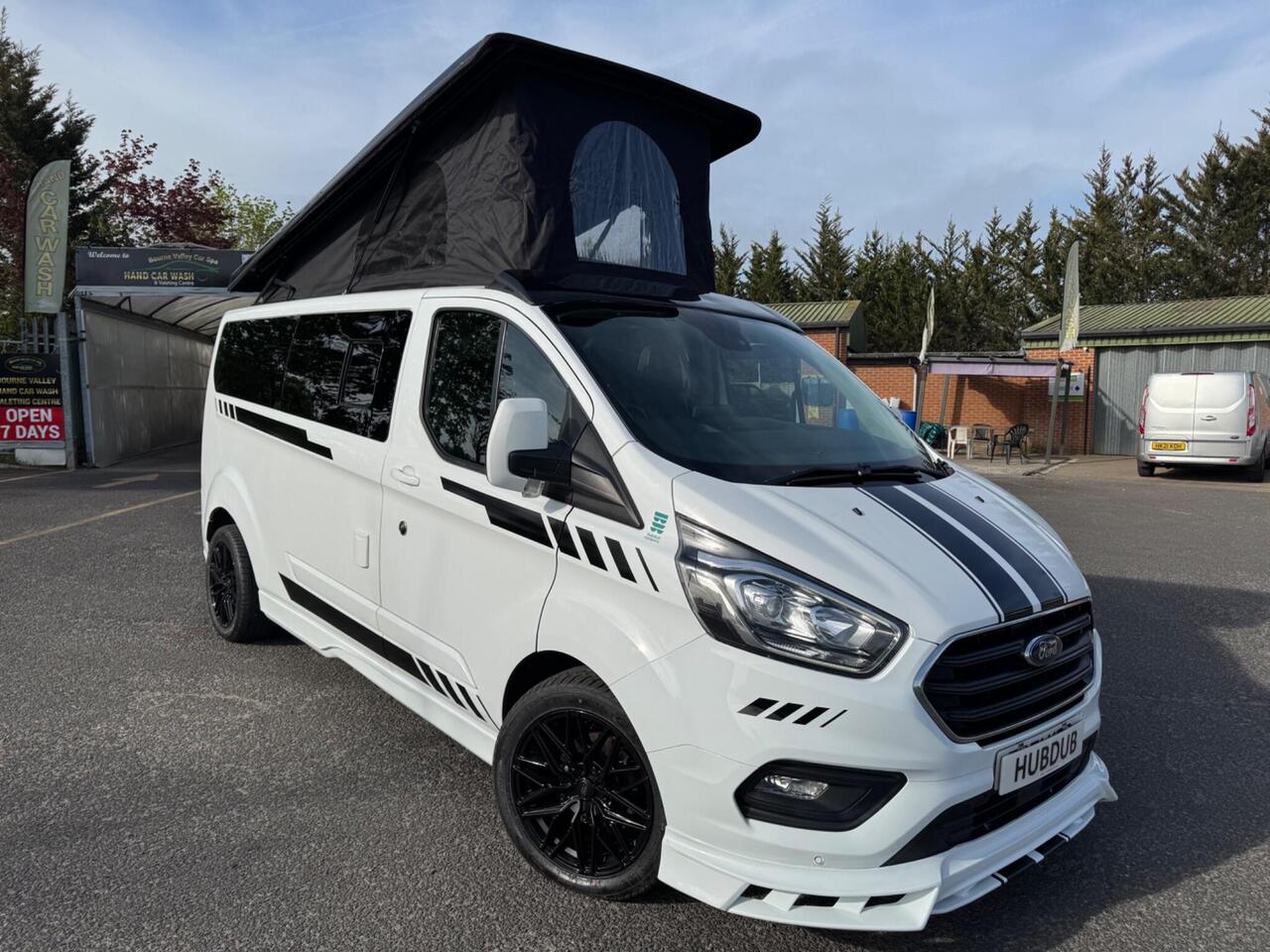
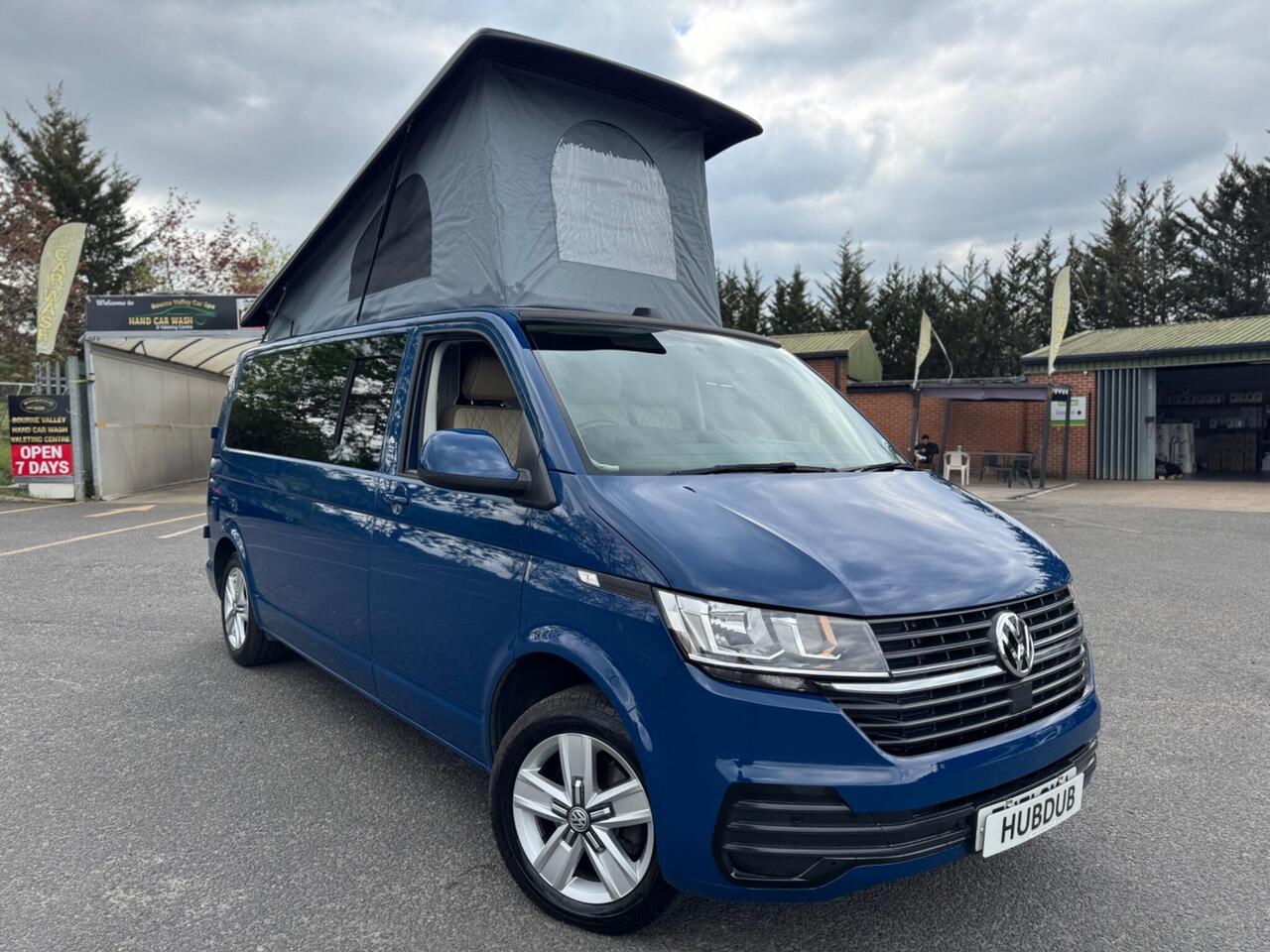
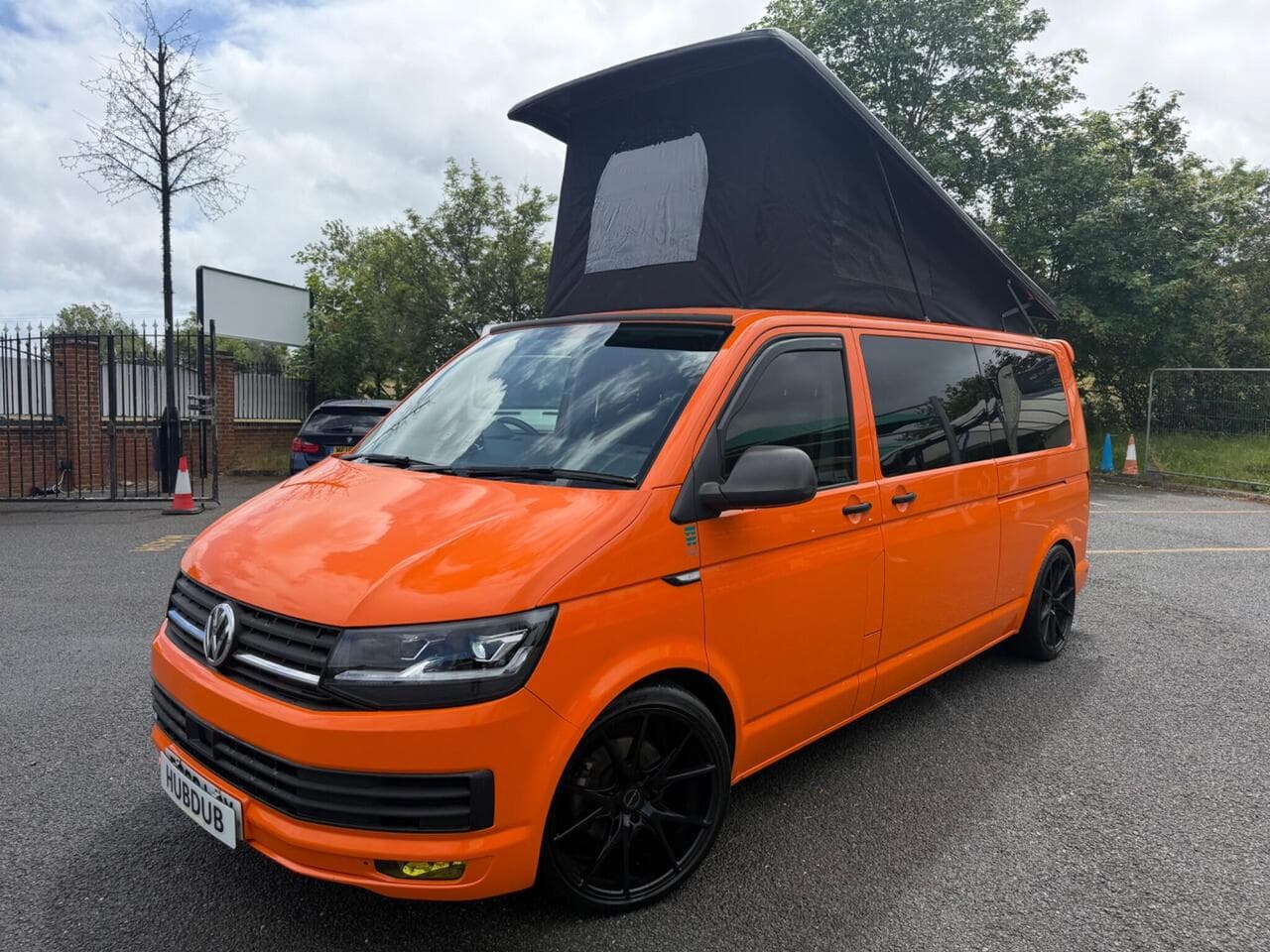
We convert two vehicles: the VW Transporter and the Ford Transit Custom. That is a deliberate limit, not a gap in the range. Knowing two platforms properly beats knowing eight badly — where the wiring runs, which panels take a bonded window cleanly, how the roof skin behaves when you cut it. A converter who will cut into anything you drive onto the forecourt is learning on your van.
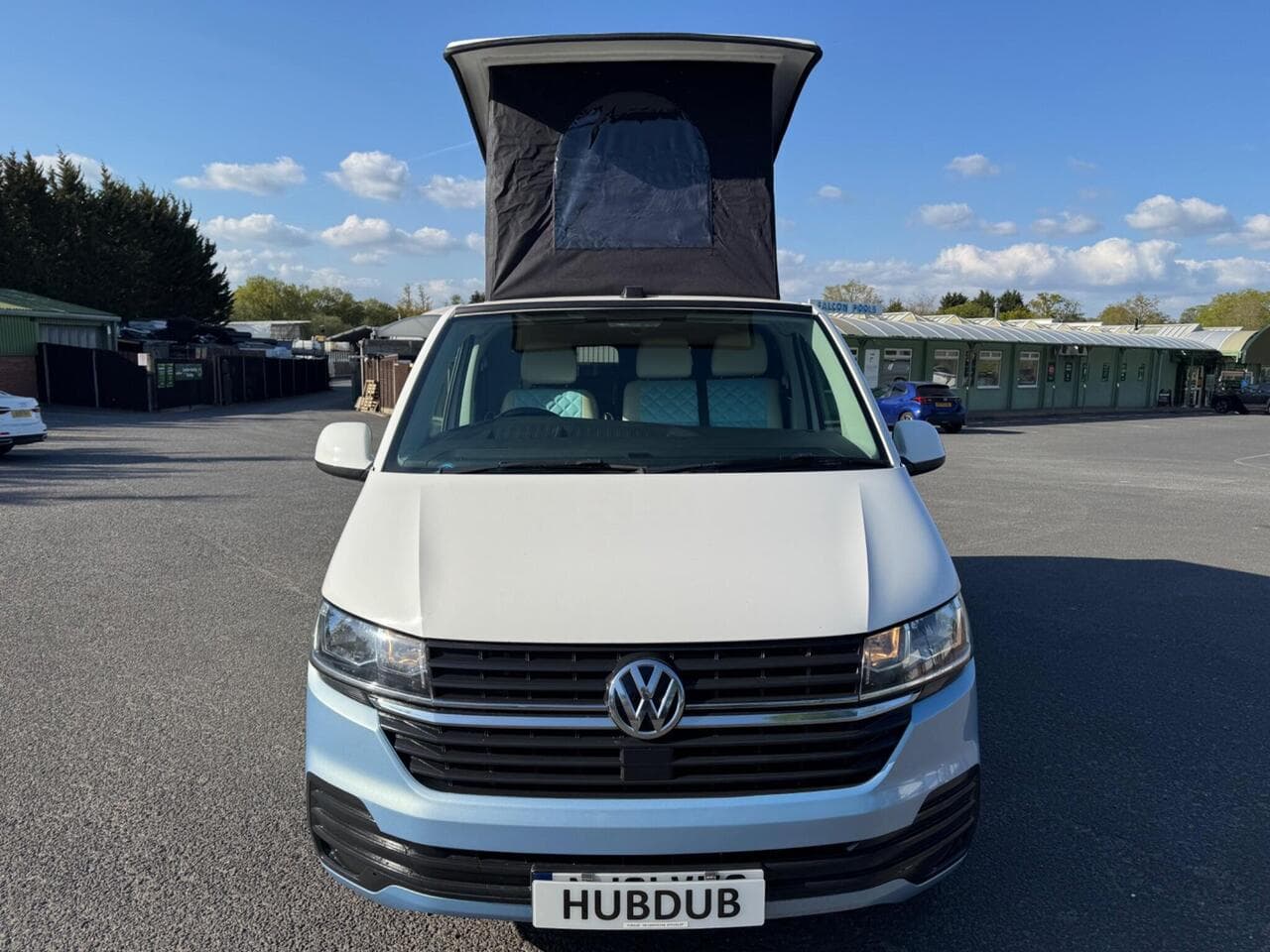
- VW Transporter (T6 and T6.1). The default. Short or long wheelbase, huge parts and specialist network, and the strongest resale of any converted van in Britain. Startline and Highline trims both convert well; the DSG automatic is worth having if you sit in traffic.
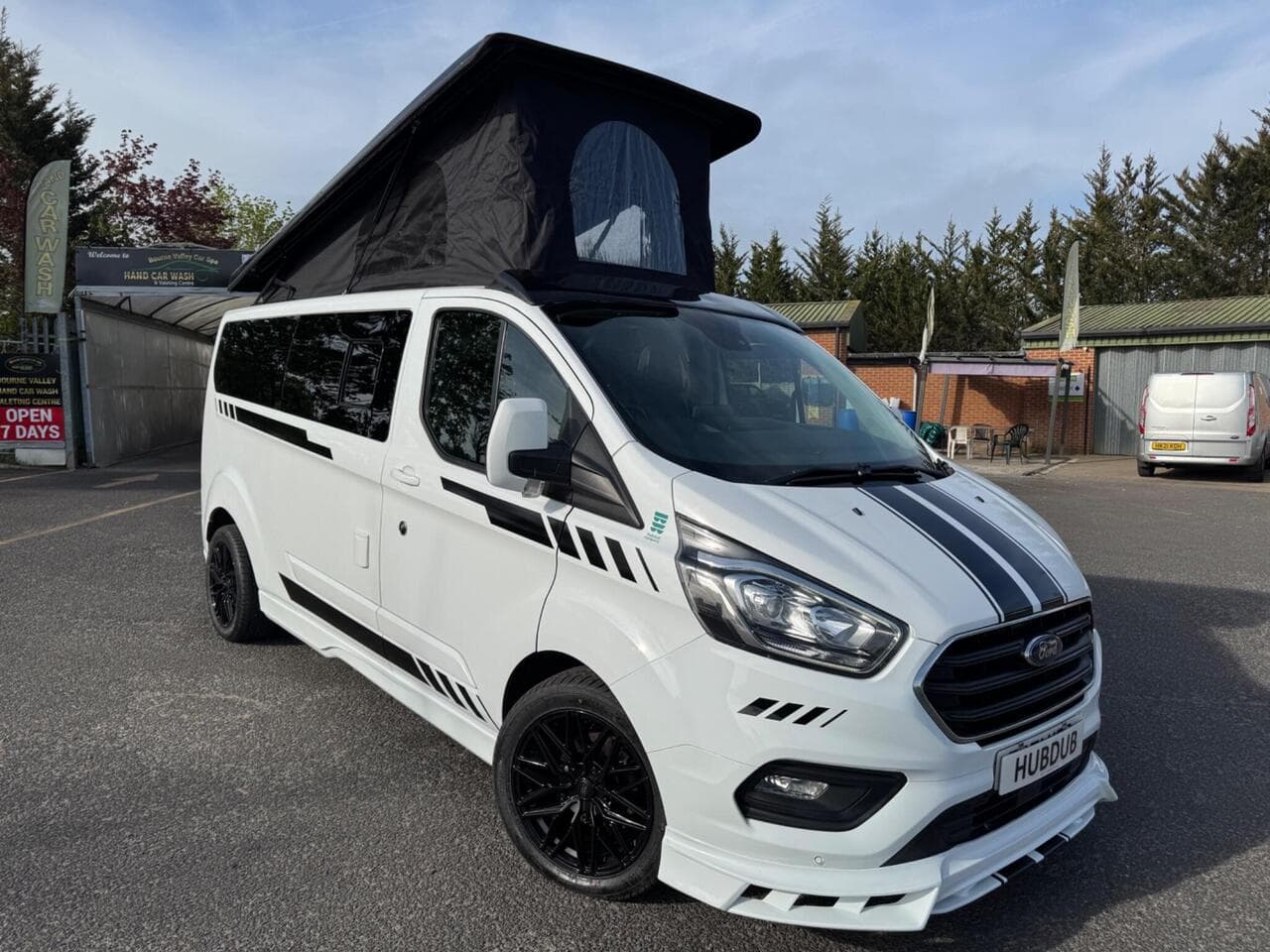
- Ford Transit Custom. Wider inside at the shoulder, cheaper to buy and service, and increasingly the sharper-driving of the two. The Limited trim arrives with most of the cab kit you would otherwise miss.
Whichever you bring, we PDI it before anyone quotes: full inspection, OBD scan, structural check. We will advise against a salvage history or significant corrosion, and we would rather lose the commission than convert a van that is going to rot behind new carpet. If you would rather not source one yourself, we will buy it for you at cost plus a small handling fee, quoted up front.
Layout decisions
Layout affects daily life more than any other decision, and it is the hardest one to make on paper. What looks generous in a sketch can feel tight to live in, which is why we put you inside a finished van before you sign anything.
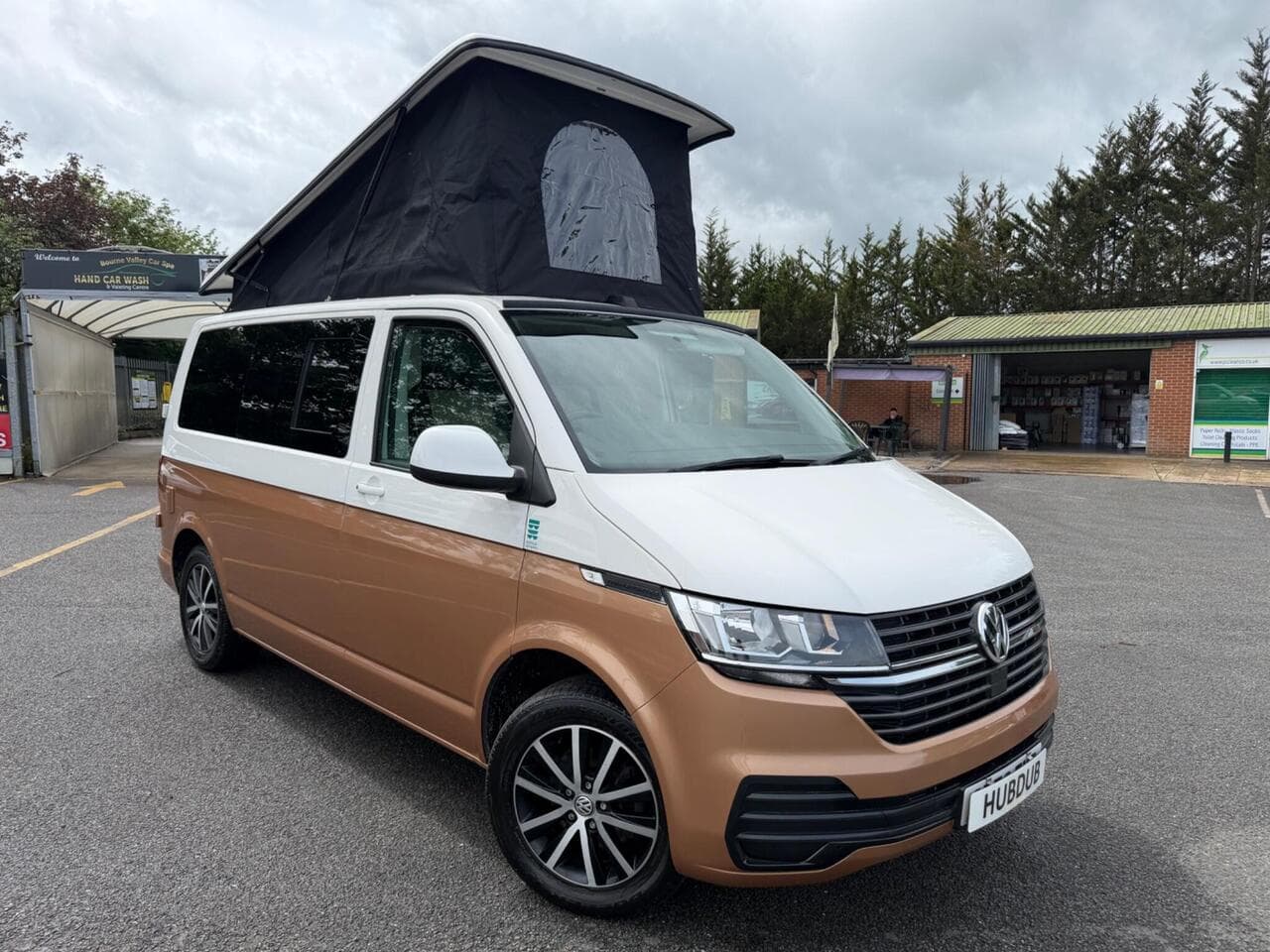
In a Transporter or Transit Custom the shape of the answer is well established: a side galley, a rock and roll bed that seats and belts passengers by day and sleeps two by night, a swivelled front seat that turns the cab into the lounge, and a pop top that adds standing height and two more berths. What you are really specifying is the wheelbase, the roof, the wardrobe and the finishes.
Electrical decisions
This is where conversions quietly differ most, because none of it is visible once the panels go back on. Every HubDub conversion carries a 110Ah leisure battery, a 240V hook-up through a double-pole consumer unit with RCD protection, a 15A automatic charger, and a Dometic CRX-50 compressor fridge.
The detail that matters more than any of those numbers: a Euro 6 van has a smart alternator, and a cheap split-charge relay will not charge a leisure battery properly from one. It needs a DC-to-DC charger. That component costs real money and it is invisible, which is exactly why it is the first corner a cheap conversion cuts.
Lead times
A HubDub conversion takes sixteen weeks. Weeks one and two are spec. Weeks three to five are design, ending in a fixed-price quote. Weeks six to fourteen are nine weeks on the workshop floor. Weeks fifteen and sixteen are testing, training and handover.
We build twelve a year and release slots a quarter at a time, so the wait to start is usually a matter of months rather than the year some converters quote. If anyone offers you a genuinely specified conversion delivered in under three months, ask which parts of it are already built and sitting on a shelf.
Warranty, paperwork and aftercare
Every HubDub conversion carries a 12-month workmanship warranty covering cabinetry, electrical, plumbing, gas, water and controls, parts and labour, and the vehicle is supplied with a comprehensive mechanical warranty on its major components. Behind both sits lifetime ownership support and 24/7 assistance, which in practice means somebody answers the phone when your heater will not light in a car park in Aviemore.
DVLA M1 SP reclassification to motorhome is included in every build. We handle the V5C paperwork and the inspection. It typically takes a few hundred pounds a year off a campervan insurance policy and moves you into better congestion charge bands. Most converters treat it as a chargeable extra.
Ask any converter how many warranty claims they have had in the last twelve months and how each was resolved. A converter who cannot answer that with specifics is not the one you want.
What to ask any converter
- How many conversions do you complete in a year, and how many people work on them?
- Which vehicles do you convert, and which do you decline? A converter with no answer to the second half is telling you something.
- Is the bed crash-tested to M1, or is it "M1 style"? Show me the certificate.
- Is the pop top certificated and MOT-compliant, and who cuts and seals the roof — you, or a subcontractor?
- Does the conversion use a split-charge relay or a DC-to-DC charger, and why?
- Where does the gas bottle live, and where does that locker drain to?
- Are the three-pin sockets live off hook-up, and what stops them flattening the leisure battery?
- Is DVLA M1 SP reclassification included, or extra?
- Can I visit mid-build, and what do I get sent in the weeks I don't?
- What exactly is excluded from the price you have just quoted?
Should you commission one
Commission when you know roughly how you will use the van, when you intend to keep it, and when you care how the materials wear. Buy finished when you want to be away next month, or when you have never owned a campervan and are not yet sure what you would specify.
If you are genuinely unsure, borrow or hire one for a week first. The cheapest way to learn what layout you want is to spend seven nights inside one. We would rather you did that than spend sixteen weeks discovering it.
Common questions
Less than most first-time buyers expect, because we price the conversion rather than the vehicle — you supply the base van. Price is set by wheelbase, with the pop top and the night heating quoted at specification, and you get a fixed price at design sign-off in week five. Current conversion prices are published on our custom build page, and finished campers with the van included are priced on the campers page.
Sixteen weeks from spec to handover: two weeks of specification, three of design, nine on the workshop floor, and two for testing, training and handover. We build twelve a year and release build slots a quarter at a time.
Yes, for a commissioned conversion. Our price covers converting a VW Transporter or Ford Transit Custom that you own or buy, and we PDI it before quoting. If you would rather not source one, we will buy it for you at cost plus a small handling fee, quoted up front. If you would rather skip the whole step, we sell finished campers too.
VW Transporters and Ford Transit Customs only. Knowing two platforms properly beats knowing eight badly, and it is why we can quote a fixed price at week five instead of discovering surprises in week nine.
A holding deposit reserves a slot and is fully refundable until design sign-off in week five. After sign-off the deposit is 30% of the contract, and that is refundable too if we miss the sixteen-week handover by more than three weeks. That has happened twice in six years, both times for parts shortages outside our control.
No. A converted VW Transporter or Ford Transit Custom sits well under 3,500kg gross weight, which a standard category B licence covers. DVLA M1 SP reclassification to motorhome is included in every HubDub build and does not change your licence requirement.