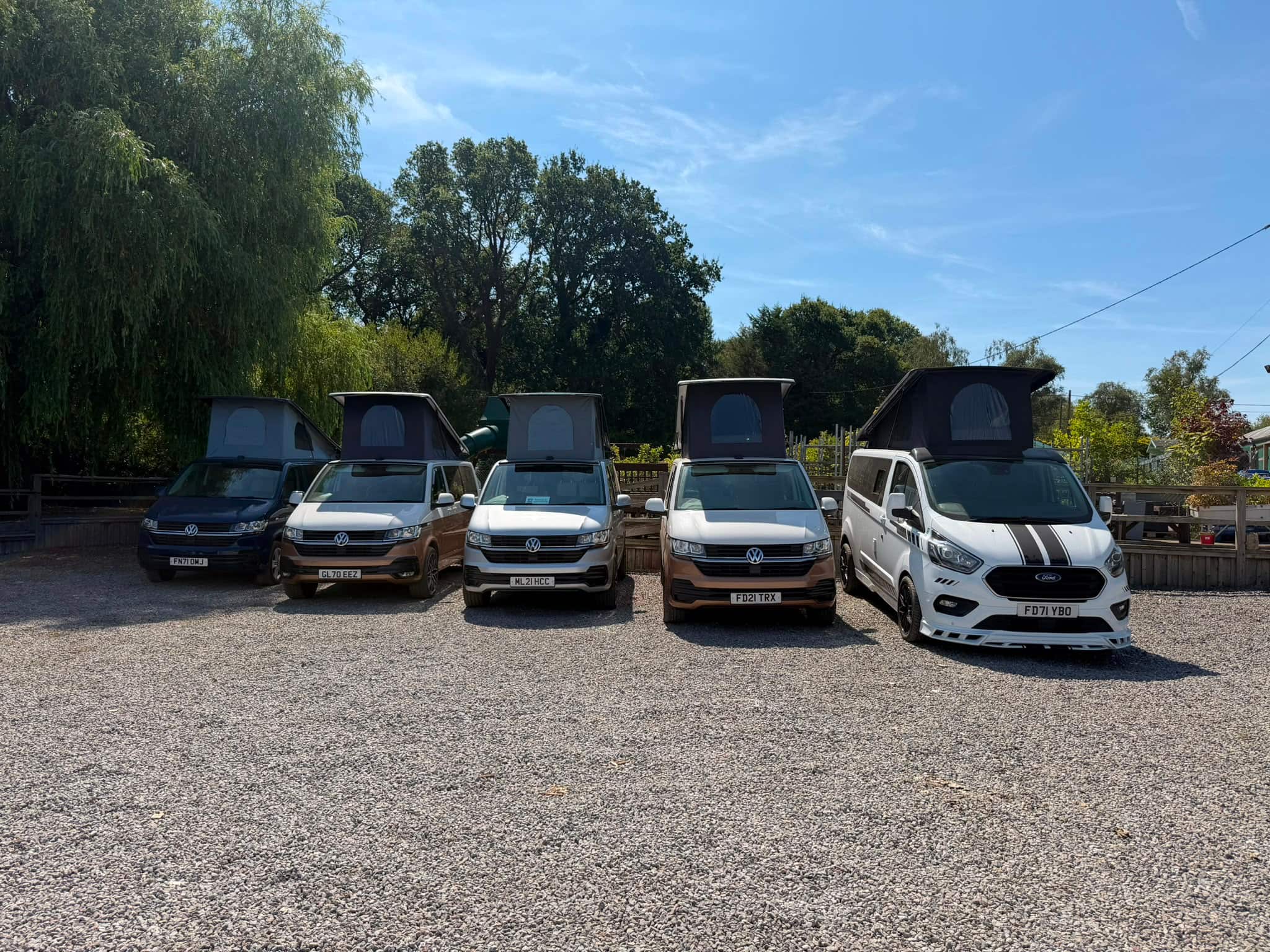
Inside a HubDub build: 16 weeks from spec to handover
What sixteen weeks in a small Petersfield workshop actually looks like, week by week, from the first conversation on the forecourt to the morning the keys change hands.
Co-founder of HubDub Campers. Writes most of what you read here. Spends the rest of his time in the Petersfield workshop.
More about HubDubThe word "bespoke" does a lot of unearned work in this industry. Some workshops take a stock layout, change the carpet colour and call it custom. Some start from a conversation and a blank van. The two are different products that often cost similar money.
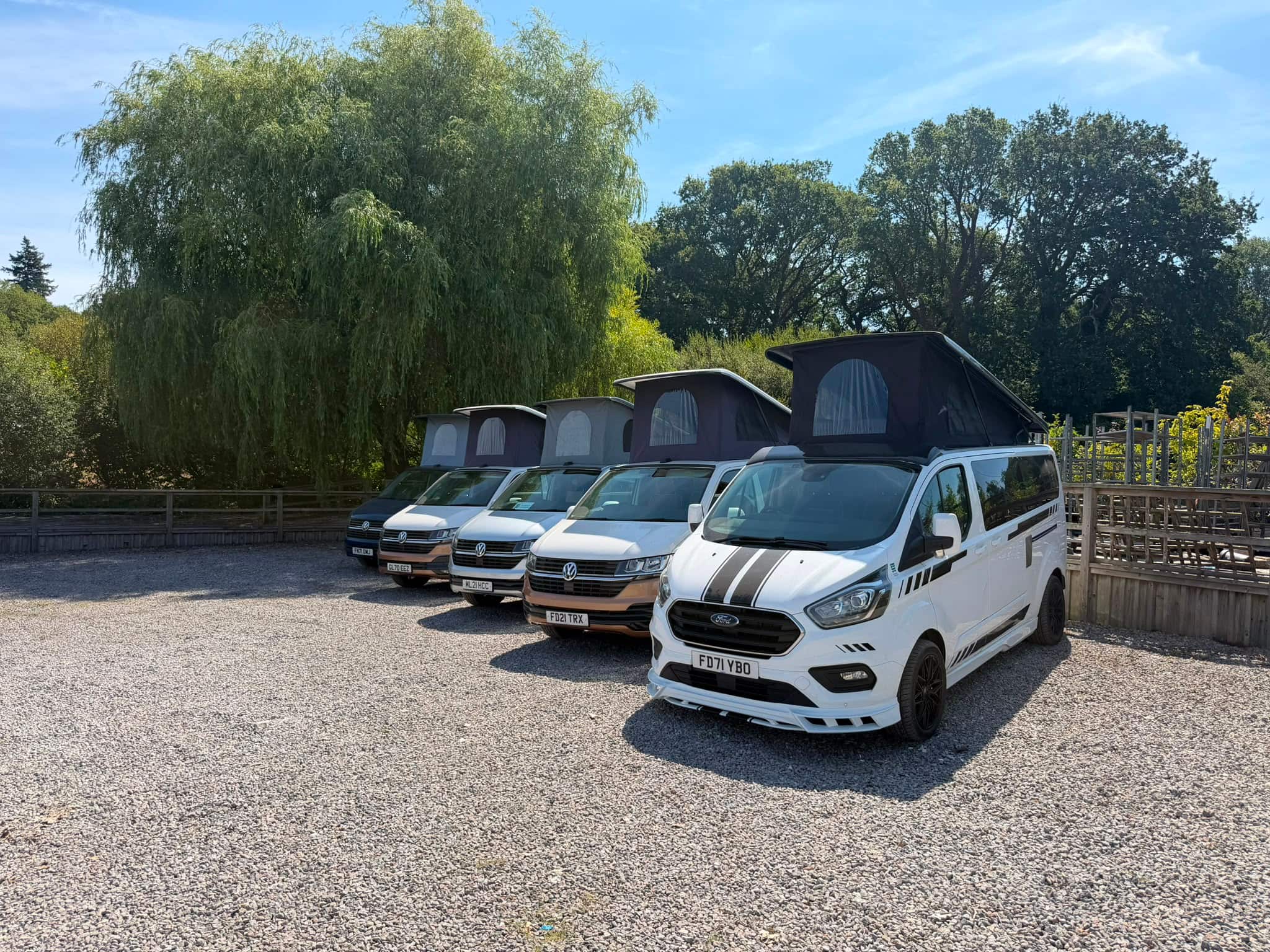
So here is ours, week by week, in enough detail to use as a checklist against anybody else's. Twelve of these leave the workshop a year, which is the number that makes the rest of it possible.
Weeks 1 and 2: spec
It starts with a long conversation, usually standing on the forecourt next to something we have already built. Two adults or four. Weekends or fortnights. A dog, bikes, a paddleboard, none of the above. Whether anyone is going to sleep in it in February.
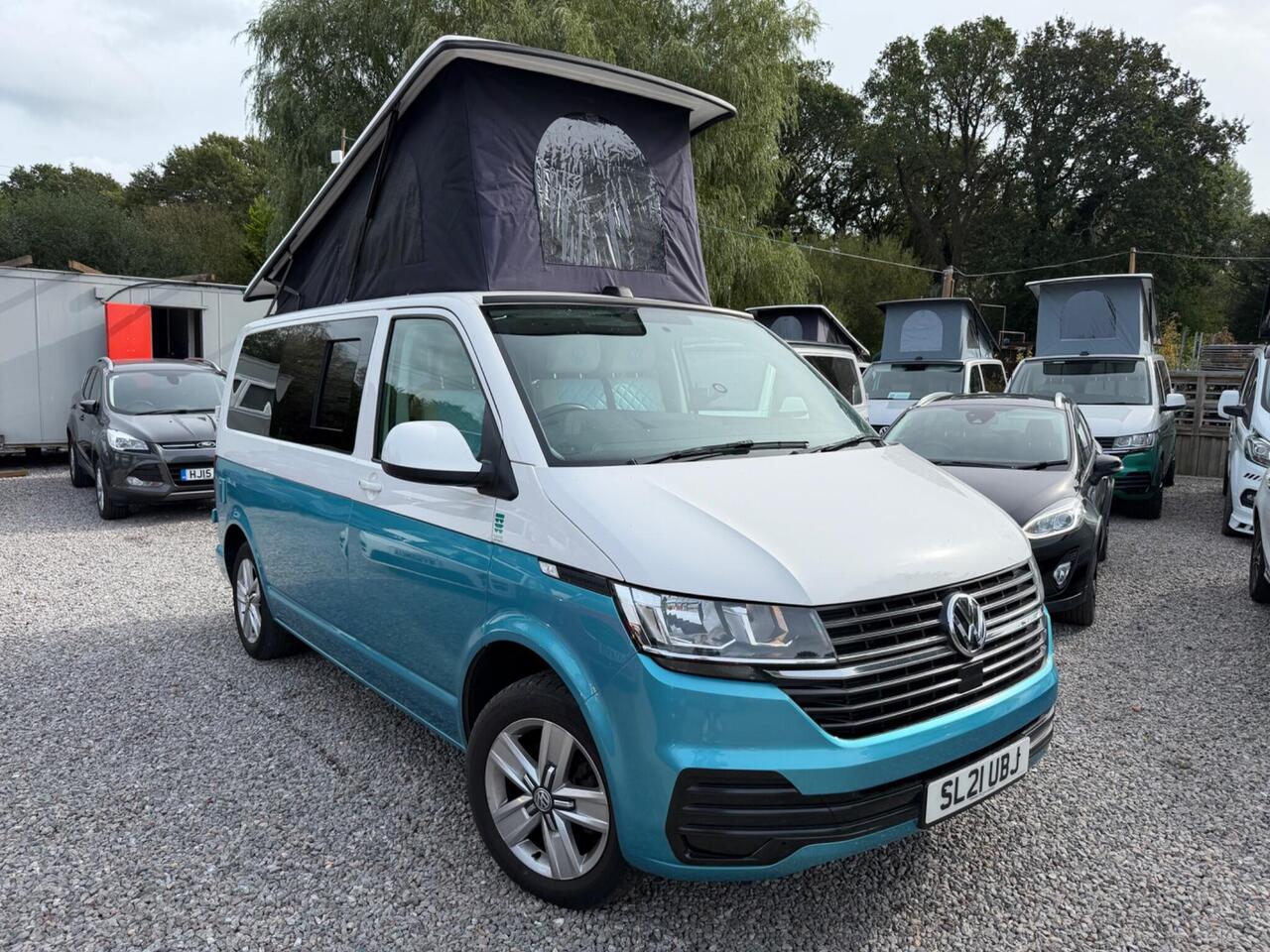
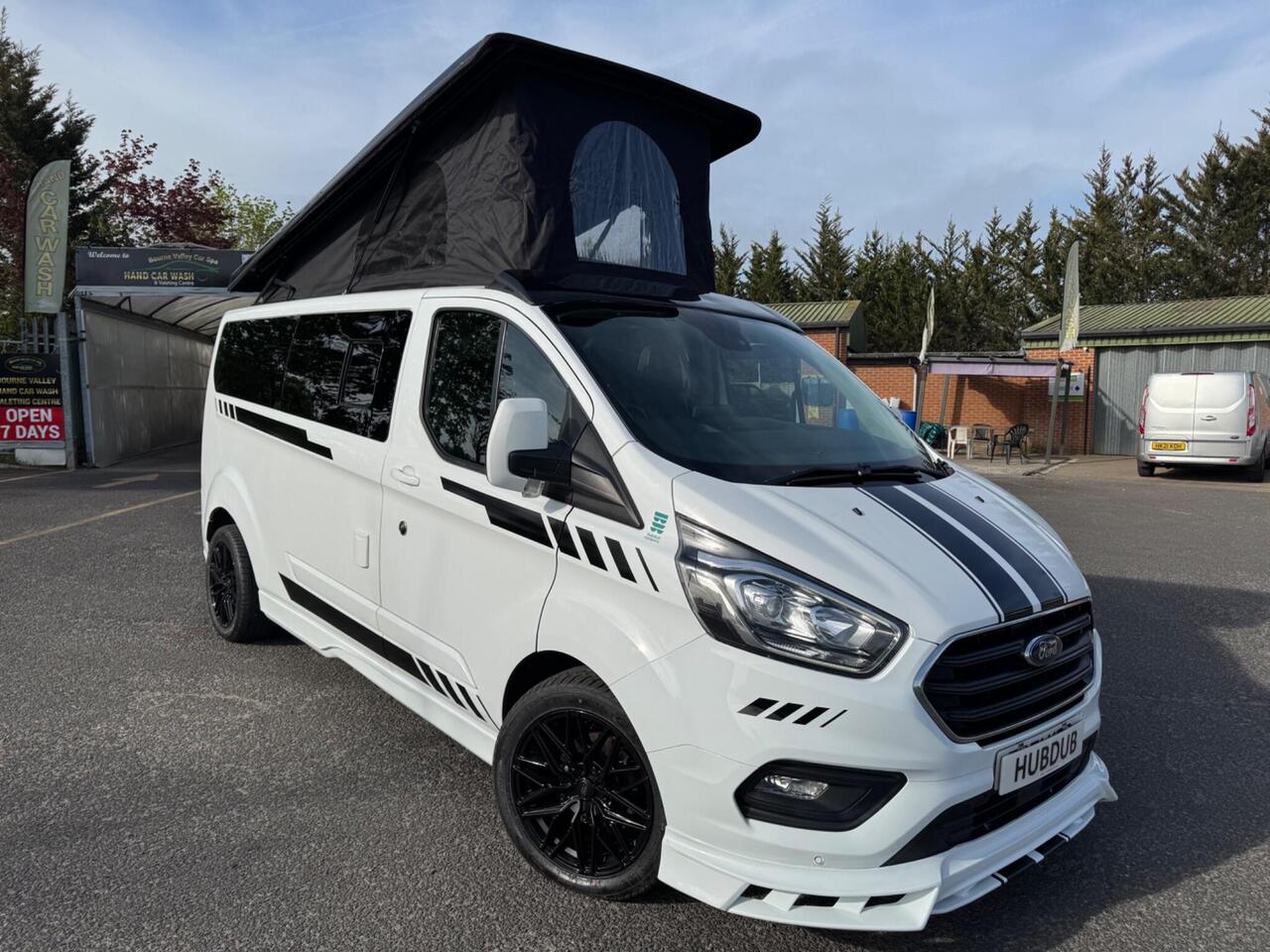
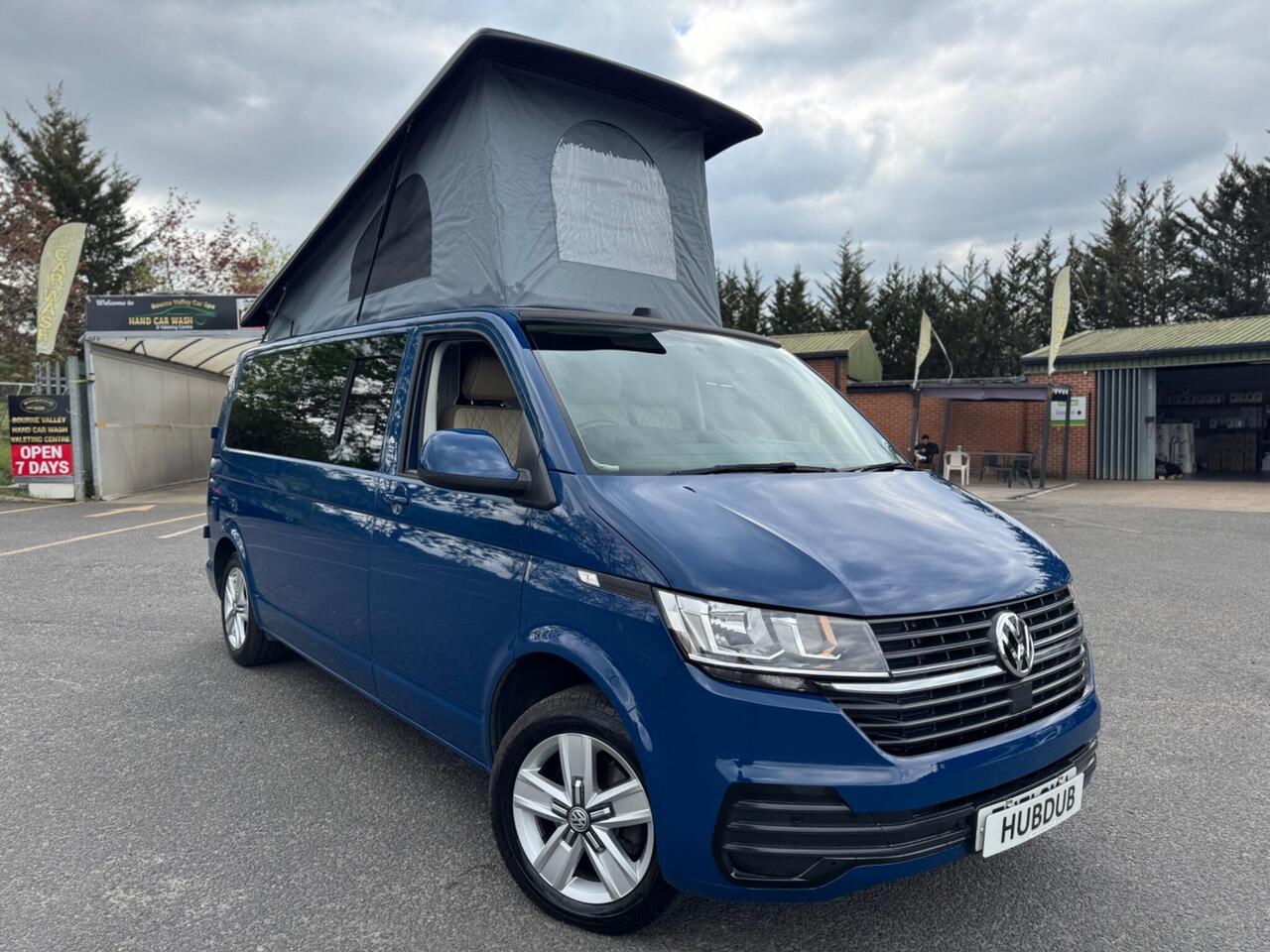
Every layout decision comes out of those answers, which is why we would rather have the conversation next to a real van than over email. You will sit in a finished camper, work out whether the bed is long enough for you specifically, and open the sliding door to see where you would actually be standing to cook.
If you are bringing your own van, this is also when we PDI it: full inspection, OBD scan, structural check. We would rather lose the commission than convert something that is going to rot behind new carpet. You leave with an indicative quote. No deposit yet.
Weeks 3 to 5: design
Layouts drawn by hand, then iterated. Most owners arrive with a clear picture in their head and leave the design phase with a different one, which is the entire point of spending three weeks on it. The third drawing is almost always the right one.
The finishes get put in front of you physically rather than as a swatch on a screen: the carpet colour, the cabinet fronts, the exact galley unit going in, the worktop. Colour reads differently on a laptop and inside a van, and this is a cheap problem to solve in week four and an expensive one to discover in week fifteen.
Week five ends with design sign-off and a fixed-price quote. Fixed meaning fixed — not subject to final specification. Everything that could move the number has been decided. Up to this point your holding deposit is fully refundable; from here it becomes 30% of contract, and that stays refundable if we miss the handover by more than three weeks.
Week 6: strip-out, insulation and lining
The van comes back to bare metal and then gets built up again. Insulation goes into every cavity in fire-retardant, lightweight, non-irritant materials. Then all-new ply lining, and Hi-Flex four-way stretch flame-retardant carpet over every panel and every piece of metalwork.
That phrase — every piece of metalwork — is doing more work than it looks. Bare metal inside a van is a cold bridge and a condensation surface. Carpeting it is fiddly, slow, invisible in photographs, and it is most of the difference between a van that feels dry in November and one that does not. The floor goes down in heavy-duty Altro at the same stage.
Weeks 7 to 9: first fix and the roof
First fix is everything that must be in place before furniture can go in: electrical runs, the water pump and plumbing, the gas locker with its 50mm floor vent draining outside the van, and the ducting for whatever heating your specification called for.
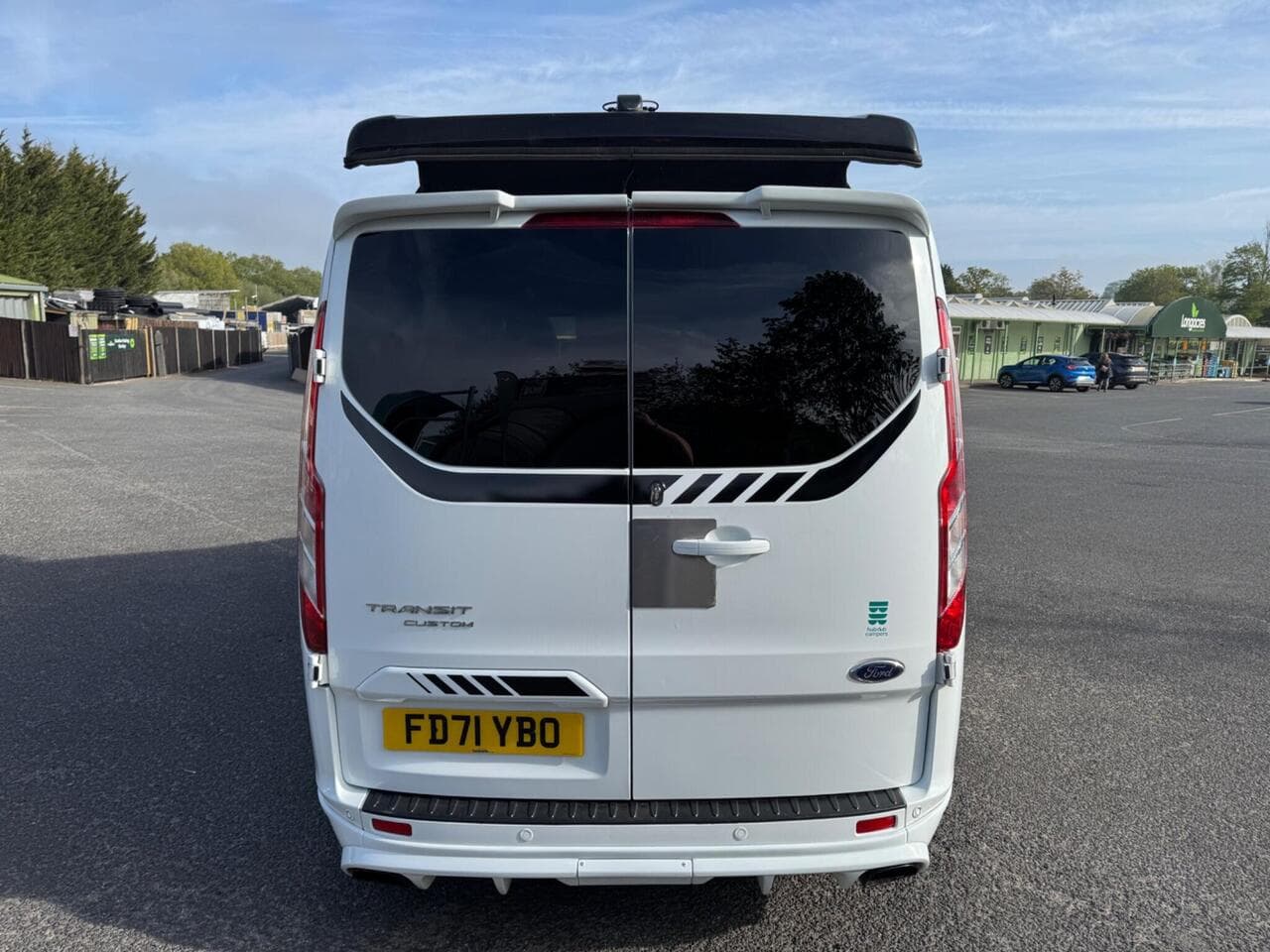
The windows are bonded in at this stage — two privacy-glass units, one sliding and one fixed. And if you have specified a pop top, the roof gets cut. We do this in our own workshop rather than sending vans out for it, because a roof cut is the most common place a conversion leaks and the failure will not show up for two winters. The fibreglass top is certificated and MOT-compliant, on laser-cut stainless scissor hinges that use the van's own fitting points, with galvanised side frames and an above-cab box-section frame.
Week eight is your first formal site visit. It is a deliberately unglamorous moment to see the van — bare, open, wires visible — and it is the most informative week of the whole build.
Weeks 10 to 13: furniture and second fix
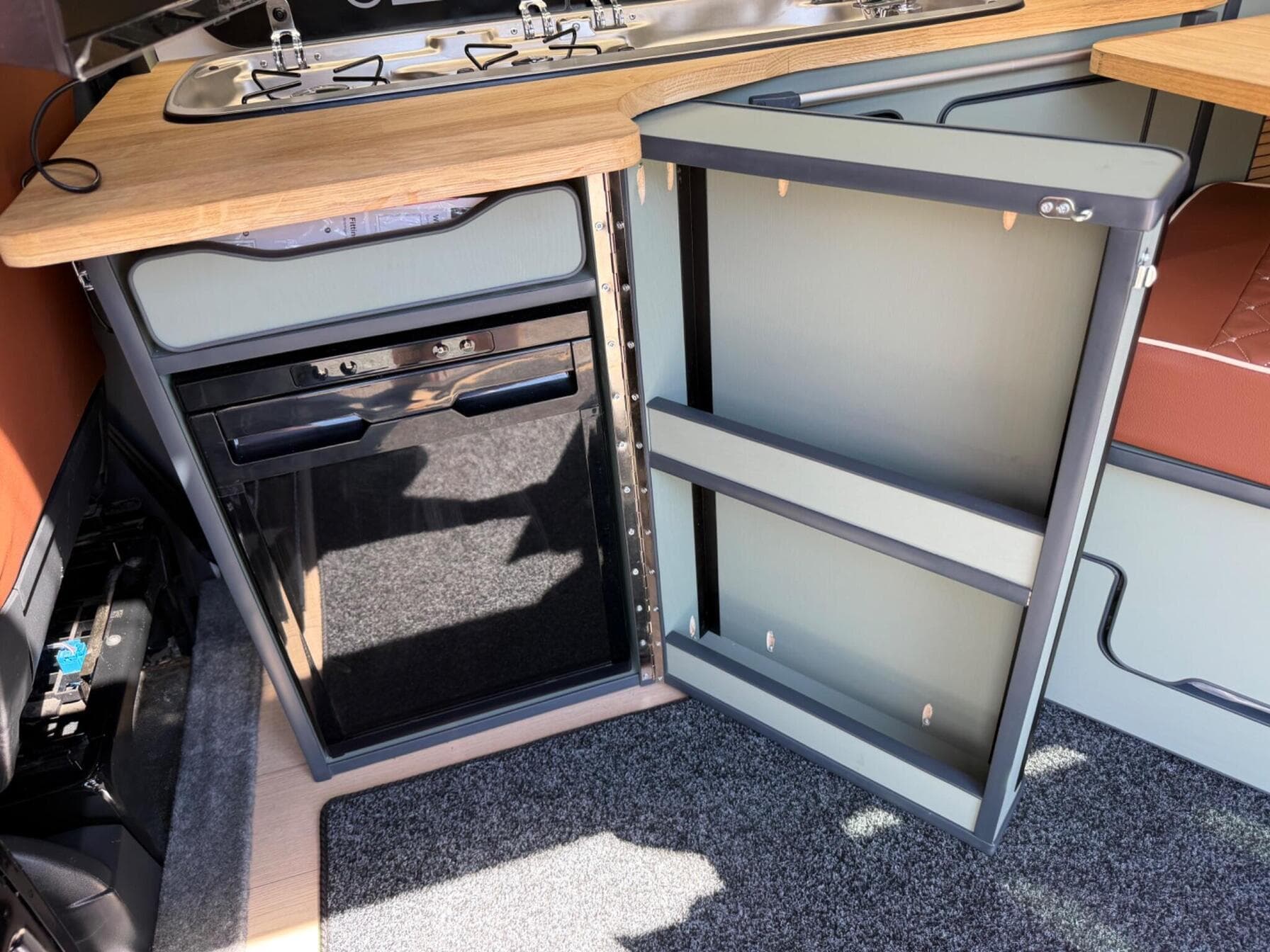
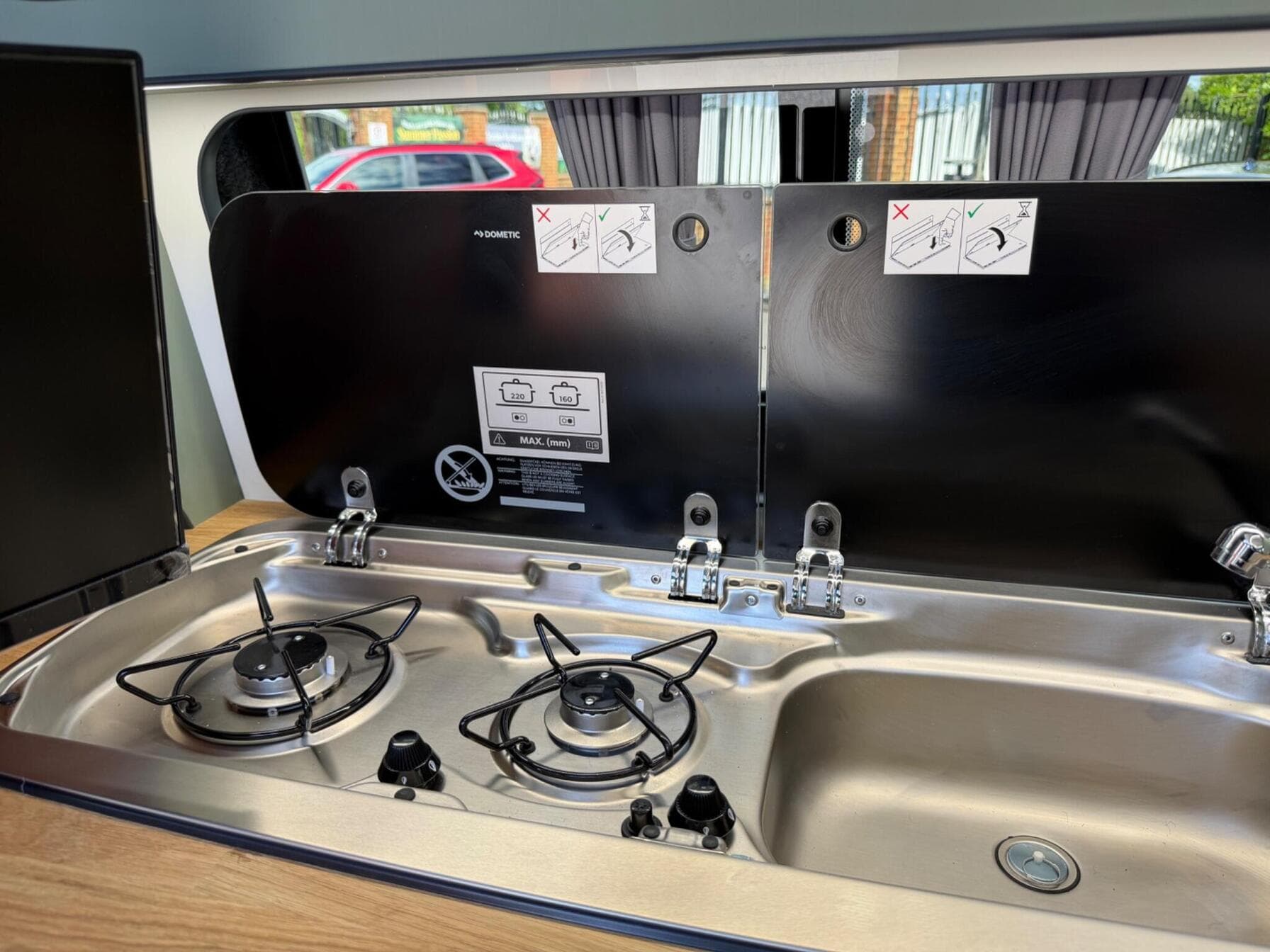
The kitchen run goes in: the Smev 9222 sink and hob combination under its glass lid, the fold-up micro-switch tap, the electric pump and the water container. Cupboards with push-button nickel catches. The tambour wardrobe. The fold-up table on its sliding rail. The Dometic CRX-50 fridge built into the run rather than dropped into a hole cut for it.
Open any door on a finished HubDub and the inside of the carcass is finished like the outside: riveted aluminium edging, a lined interior, shelves on rails. Damp, rattles and sagging shelves all start on the side of the door nobody photographs, and it is the first place we would look in somebody else's van.
The bed goes in — a SmartBed EVO II, crash-tested to M1 as a seat, with two inertia-reel belts and a front bed board matched to the furniture. The double swivel base goes in up front. Week thirteen is your second formal site visit, and by now the van looks like a camper.
Week 14: electrics, controls and paperwork
The 110Ah leisure battery, the DC-to-DC charging, the 240V side through a double-pole consumer unit with RCD protection, the 15A automatic charger and the external hook-up point. The solar panel and its controller. Four LED downlighters. Then everything gets grouped onto one panel at eye level — battery and solar readout, sockets, 12V, USB-A and USB-C — rather than scattered down the van.
This is also when the DVLA M1 SP reclassification paperwork goes in. We handle the V5C and the inspection. It is included in every build, it typically takes a few hundred pounds a year off your insurance, and most converters treat it as a chargeable extra.
Weeks 15 and 16: testing and handover
Every system tested under load. Every drawer cycled. Every light run at full and dimmed. The water system filled, run and drained. The gas checked. Every door opened and closed enough times to be sure of it.
Then half a day of owner training: how the heating works, how to read the battery monitor, what the consumer unit does, how to drop and raise the roof properly, how to winterise the water, where the spare keys live.
And a night in the van before the keys are released. You stay in it on site, make breakfast, charge a phone, sleep in the bed. The next morning we go through whatever came up over a coffee. Questions surface on that night that no amount of walking around a van on a forecourt will produce, and it is far better that they surface here than three hundred miles away.
What you get in the weeks you are not here
Progress photographs every Friday, whether you ask for them or not, plus a daily WhatsApp thread with your project manager. Two formal site visits at weeks eight and thirteen, and you are welcome more often by appointment.
The Friday photographs are not marketing. They are the mechanism that makes a sixteen-week wait bearable and stops small misunderstandings becoming week-fourteen arguments. If a converter cannot tell you what you will receive in week nine, ask why.
What goes wrong
Builds slip. Ours have twice in six years gone more than three weeks past handover, both times waiting on parts we could not source, and both times the deposit was refundable and we said so before we were asked.
The policy that prevents most of it is ordering long-lead items in week one rather than week six. The policy that handles the rest is telling the owner the same week it happens, in the Friday photographs, rather than the week before handover.
Common questions
Sixteen weeks from spec to handover: two weeks of specification, three of design ending in a fixed-price quote, nine weeks on the workshop floor, and two for testing, training and handover. We complete twelve builds a year and release slots a quarter at a time.
Yes. Two formal site visits are scheduled, at weeks eight and thirteen, and you are welcome more often by appointment. You also get progress photographs every Friday whether you ask for them or not, plus a daily WhatsApp thread with your project manager.
At design sign-off in week five. Everything that could move the number — wheelbase, roof, heating, finishes — is decided before that point, and the price does not change afterwards. Your holding deposit is fully refundable up to sign-off.
The deposit is refundable if we miss the sixteen-week handover by more than three weeks. That has happened twice in six years, both times for parts shortages outside our control, and both times we said so in the weekly update rather than waiting to be asked.
Every conversion carries a 12-month workmanship warranty covering cabinetry, electrics, plumbing, gas, water and controls, parts and labour, and the vehicle is supplied with a comprehensive mechanical warranty. Behind both sits lifetime ownership support and 24/7 assistance — which mostly means somebody answers the phone when you are a long way from Petersfield.