Winter in the Cairngorms: how a conversion holds up in the cold
What sub-zero nights actually demand from a campervan, which spec choices earn their money, and the habits that matter more than any of them.
Co-founder of HubDub Campers. Writes most of what you read here. Spends the rest of his time in the Petersfield workshop.
More about HubDubEvery converter will tell you their van is winter-ready. The honest version is that winter performance comes down to a handful of specific decisions and a couple of habits, and that the habits do more work than most of the decisions.
Here is what actually matters once overnight temperatures go below freezing, in rough order of impact.
Insulation, and the part everyone skips
Insulation in every cavity is table stakes and every serious converter does it. The part that separates vans in February is whether the metalwork got covered.
Bare metal inside a van is a cold bridge. Warm, damp air from two people breathing hits it, and the water leaves the air and arrives on the panel. Every HubDub conversion is lined in Hi-Flex four-way stretch flame-retardant carpet across all panels and all metalwork, with heavy-duty Altro on the floor. It is slow, fiddly work that is invisible in photographs, and it is most of the difference between a van that feels dry in the Cairngorms and one that feels like a tent with a radio.
Heating
Night heating is specified to your travel pattern and quoted at design sign-off, which is deliberate: somebody doing summer weekends in Dorset and somebody doing February in Aviemore should not be sold the same heater.
The counter-intuitive part is sizing. An oversized heater is worse than a right-sized one — it runs in short hard bursts, cycles more, and uses more fuel to hold the same cabin temperature than a smaller unit ticking along steadily. Tell your converter what the worst night you intend to spend in the van looks like, and let them size to that rather than to a bigger number.
The roof, in winter
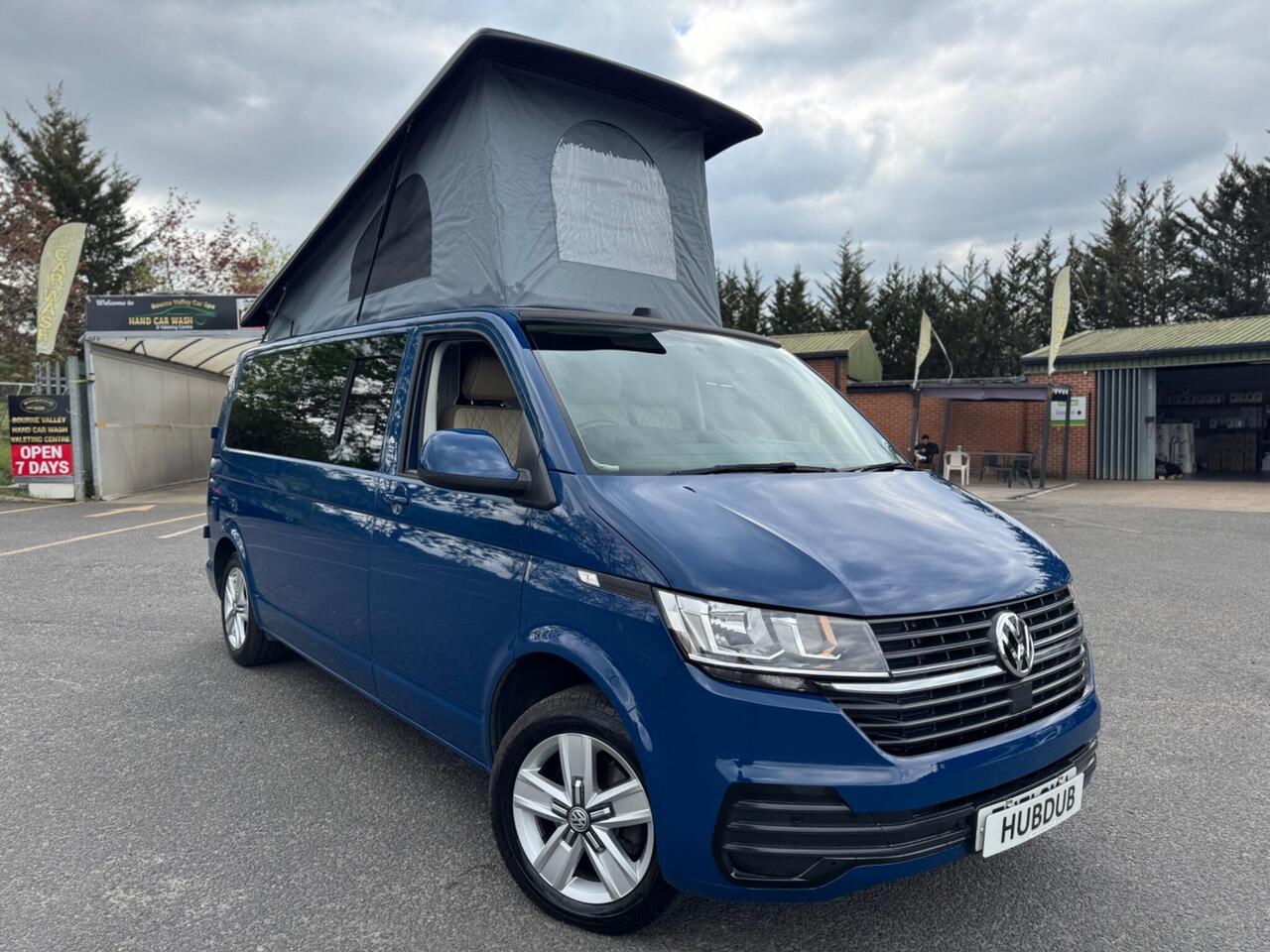
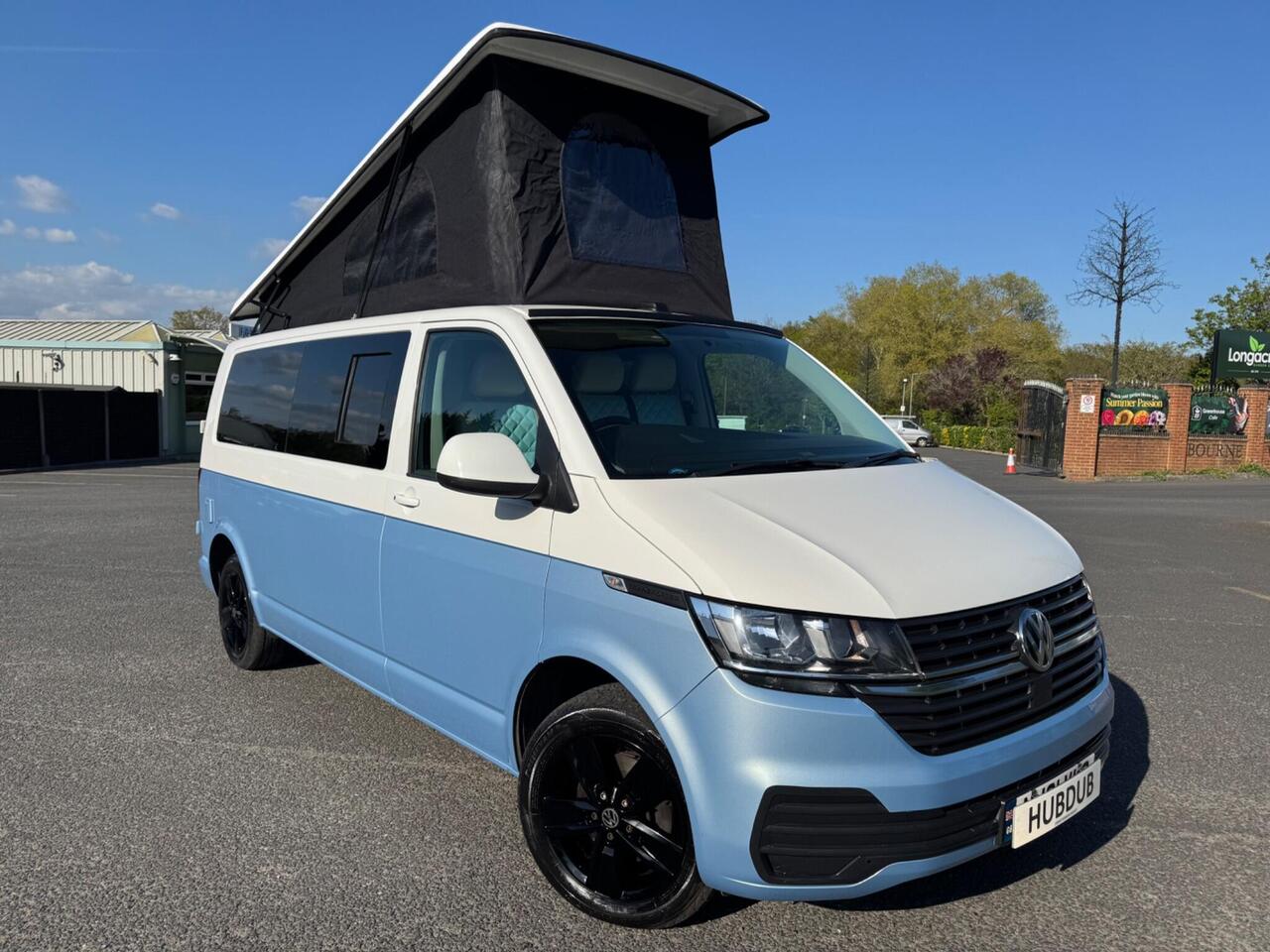
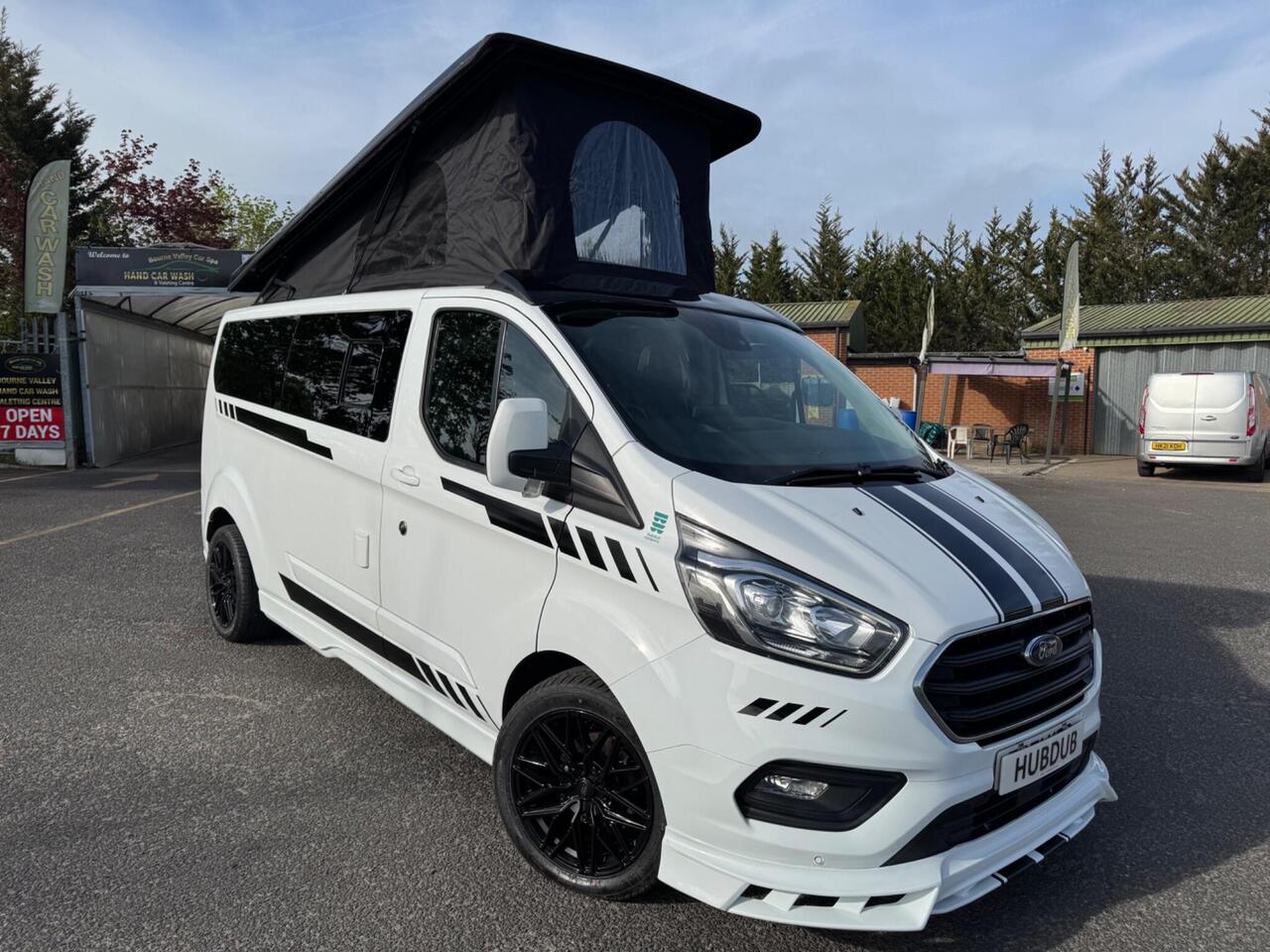
This is the one that surprises people. A pop top is the best thing about the van for fifty weeks of the year and the weakest part of it in a hard frost, because canvas insulates approximately as well as canvas.
Winter owners overwhelmingly run with the roof down and sleep below. You lose standing height and the second double, and you gain a considerably warmer van that is also far happier in the wind that usually accompanies the cold. Plan the trip as a two-berth and treat the upstairs as a bonus if the weather turns mild.
Water
Ten litres in a container is easy to manage in winter for one reason that makes it better than a tank: you can bring it inside. A plumbed-in tank slung under a van freezes and there is nothing to be done about it at two in the morning. A container lives in the warm with you.
Drain the pump and the run before a hard night if the van is going to sit unheated, and refill in the morning. It takes two minutes and it is the difference between a working tap and a split fitting.
Power in the cold
Two things work against you in winter. Batteries deliver less of their capacity when they are cold, and solar contributes close to nothing in December in Scotland — anybody who tells you their roof panel carries them through a Highland winter has not measured it.
Which makes driving your power source, and makes the charging arrangement the thing that matters. On a Euro 6 van a split-charge relay will not properly refill a leisure battery no matter how far you drive, because the smart alternator drops its voltage once the starter battery is topped up. A DC-to-DC charger will. In summer you get away with the difference. In February you do not.
Condensation
The real enemy. Two adults asleep for eight hours put roughly a litre of water into the air, and it has to go somewhere. In a well-lined van it will not go into the panels, so it goes onto the glass — which is fine, as long as it then goes outside.
Ventilate deliberately rather than sealing the van up. A vent cracked open all night costs you a little heat and saves you a great deal of damp. Counter-intuitive when it is minus four outside, correct anyway.
Habits that beat spec
Owners who use their vans regularly in winter all seem to converge on the same three. They run the heater low overnight rather than blasting it in the morning, which uses less fuel for a more comfortable night. They wipe the inside of the windscreen before bed, which removes most of tomorrow's problem tonight. And they keep a microfibre cloth and a mat by the sliding door for the boots that are going to arrive wet.
None of that costs anything. All of it does more for a February night than another hundred amp-hours would.
Common questions
Yes, comfortably, in a van that is properly insulated and heated. The two things to plan for are condensation and keeping the water usable. Both are solvable — and in a pop-top van the single biggest winter improvement is free: sleep with the roof down.
With the roof down, yes. With it up, less so — canvas insulates about as well as canvas, and it is also the part least happy in winter wind. Most winter owners run as a two-berth downstairs and treat the upstairs as a bonus if the weather turns mild.
Ventilate rather than seal. Two adults asleep put about a litre of water into the air overnight and it has to leave the van. A vent cracked open all night costs a little heat and saves a lot of damp. Lining the metalwork, not just the panels, removes the cold bridges the water would otherwise condense on.
It will if it is actually being recharged. Batteries give up less capacity when cold and solar contributes almost nothing in a Scottish December, so driving becomes your power source — which only works if the van charges through a DC-to-DC charger rather than a split-charge relay. On a Euro 6 van a relay never gets the battery full. In summer you get away with it; in February you do not.
Glenmore and the sites around Aviemore stay open through the season and are bookable. Away from them, Scottish access rights apply with the usual responsibilities — read the Scottish Outdoor Access Code, check for local byelaws, and be aware that a snowy pull-off you got into at dusk may not release you at dawn.